SpringOne 2GX 2011
Chicago, October 25-28, 2011

For Members

 Magnificent Mile Marriott
Downtown Chicago
540 North Michigan Ave.
Chicago, Illinois 60611
1 (800) 228-9290
[ Map it ]
Hans Dockter
Founder of Gradle and CEO of Gradleware
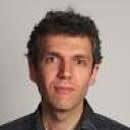
Hans Dockter is the founder and project lead of the Gradle build system and the CEO of Gradleware, a company that provides training, support and consulting for Gradle and all forms of enterprise software project automation in general.
Hans has 13 years of experience as a software developer, team leader, architect, trainer, and technical mentor. Hans is a thought leader in the field of project automation and has successfully been in charge of numerous large-scale enterprise builds. He is also an advocate of Domain Driven Design, having taught classes and delivered presentations on this topic together with Eric Evans. In the earlier days, Hans was also a committer for the JBoss project and founded the JBoss-IDE.
Hans has 13 years of experience as a software developer, team leader, architect, trainer, and technical mentor. Hans is a thought leader in the field of project automation and has successfully been in charge of numerous large-scale enterprise builds. He is also an advocate of Domain Driven Design, having taught classes and delivered presentations on this topic together with Eric Evans. In the earlier days, Hans was also a committer for the JBoss project and founded the JBoss-IDE.
Presentations
Enter The Gradle
This presentation introduces the audience to the power of Gradle through many real-world examples that are demonstrated live. By the end of the presentation, you'll understand how Gradle helps to elegantly solve the challenges that we face in our daily enterprise builds.
We'll go through such powerful concepts as: advantages of declarative over imperative build systems, convention over configuration without rigidity, task definitions and dependencies, the benefits of plugins, deep multi-project support, runtime optimizations through partial builds and harvesting existing functionality through Ant and Maven integration as well as strategies for migrating from these build tools. We will demonstrate some of the innovative goodies that come with Gradle out-of-the-box, like smart incremental builds, the Gradle Daemon and the Gradle Wrapper. We show also many of the new features like Eclipse integration, Sonar integration, Heroku integration, C/C++ support and other new plugins.
Enterprise Gradle
In this talk we will cover many Gradle power features that are particularly helpful for the real heavy lifting often needed in enterprise builds.
We will start this session with the concept and advantages of autowiring the Task Dependency Graph based on the inputs and outputs. We will then talk in detail about the new dependency management features such as the new cache, customizable dynamic revision handling and customizable version conflict resolution. From there we'll explore the new extension mechanism for the Gradle DSL and introduce the Gradle daemon. We will also discuss our take on best practices for dealing with module dependencies in the enterprise and how this can be mapped with Gradle. Finally we will show how you can programatically customize the way the Gradle build model is mapped to the STS Gradle Eclipse plugin. All those features are presented in the context of our roadmap and what further improvement you can expect with future releases.
- NFJS SITES:
- No Fluff Just Stuff
- Uber Conf
- NFJS One
- SpringOne 2GX
- Rich Web Experience
- Project Automation Experience
- SPRINGSOURCE SITES:
- Springsource.com
- Springsource.org
© 2011 No Fluff, Just Stuff TM and SpringSource, a division of VMware. All rights reserved. Java is a registered trademark of Oracle.