
September 9-12, 2013
Santa Clara, CA, USA


SpringOne Session Descriptions
We are busy planning a great event. The following are sessions that have been confirmed. More schedule details will be published soon.
Maciej Skierkowski - AppFog Product Manager

Using PHP with Java/Spring in the Cloud
Over 60% of enterprise Java apps end up using PHP as their frontend. PaaS is a rapidly evolving technology that is getting closer to being an ideal platform for Java deployment, but without full PHP support, will never meet the needs of many enterprise developers. Spend some time getting to know what PaaS brings to Java deployment and how PHP works in PaaS as well. Anyone who attends will receive a free invitation to AppFog which now supports both Spring and PHP to test out your new knowledge.
Chris Beams - Spring Framework Committer

Configuration Enhancements in Spring 3.1
Come to this session to see Spring 3.1's new configuration enhancements in action.
Getting Involved with Spring 101
The infrastructure that supports Spring projects has seen a number of important changes in the last year – including a major redesign of the springsource.org website, migrations to Git for source control and Github for code hosting, using Gradle as a build system and much more. Come to this session to learn how to make the most of these changes. Whether your aim is learning about Spring, consuming Spring artifacts, tracking issues, building from source, or contributing code to the projects you're most interested in, you'll find that it's never been easier to interact with the Spring development teams and community at large.
Emad Benjamin - Staff Solutions Architect, VMware

Production Proven Methods of Running Enterprise Java on vSphere
This session shares many of the production proven methods of running Java on vSphere. Covering scalability, load balancer integration, zero-downtime of application releases, best practices, use Java API to automate VM manipulation, troubleshooting techniques, and how to improve your application architecture using vFabric components in addition to vSphere.
Stephen Bohlen - Senior Software Engineer, VMware

Spring and Platform Interoperability
In many environments today there are multiple technology stacks and the services built on the various technologies need to be able to connect to each other. In this talk we focus on interoperability between Java and .NET, showing how the Spring framework for both Java and .NET can be used to develop elegant and powerful integration solutions with NoSQL, NewSQL, Data Grids, messaging middleware, and more.
Jon Brisbin - SpringSource R&D

Using Spring Data and NoSQL from Groovy
The Spring Data support for NoSQL databases is designed to be useful from Java. But it's even more so from Groovy. In combination with the RabbitMQ DSL for Groovy, we'll look at making NoSQL at home in the Groovy/Grails world. We'll look at Closures as consumers, the Riak data access DSL that's part of Spring Data for Riak, and using the MongoDB support in Spring Data to NoSQL-enable a Groovy application.
Evented Data with RabbitMQ
The demands of modern applications are changing to be more asynchronous in nature. With the increasing popularity of event frameworks like Node.js for building applications, it's possible to event data such that updates to data in the datastore trigger a series of events in the application to do things like freshen caches, perform summary calculations, and sundry other things. This presentation will demonstrate how to event data using the Riak datastore and a postcommit hook that will send an AMQP message through RabbitMQ that can be consumed by Spring Integeration, Spring AMQP, Grails, Node.js, Ruby, or other application backends.
Roy Clarkson - Senior Software Engineer at VMware

Mobile Web Development with HTML5
Come explore front-end development options for mobile apps based on HTML 5. More session details to be added soon.
Making the Mobile Web Native with PhoneGap
PhoneGap is an HTML5 app platform that allows you to author native applications with web technologies and get access to APIs and app stores. PhoneGap leverages web technologies developers already know best... HTML and JavaScript. Attend this session to learn all about PhoneGap and how to integrate it into your Spring development.
Native Android Development Practices
Learn about the everyday challenges facing developers of native Android apps, including coverage of how the Spring Android project helps. More session details to follow soon.
Andy Clement - Staff Engineer with SpringSource
Spring Tooling Update - New and Noteworthy
In this session we will walk through the Spring tooling landscape and demo the new and improved features. Attendees will see tooling support for Spring 3.1 in action together with improved support for annotation-based Spring programming including content-assist, validation, quick-fixes and refactorings. We will take a look at improved support for XML-based Spring programming and the tooling support for the Cloud Foundry PaaS. Then a quick tour of recent improvements in the Groovy/Grails support and our new Gradle tooling. We close this session with an overview of the general release cycle and the plan for the next releases.
Derek Collison - Derek Collison, CTO, Chief Architect Cloud Application Platforms

Cloud Foundry: Inside the Machine
This session provides an in depth look at the Cloud Foundry architecture and how understanding the platform structure can help you understand what things are possible to build with your applications. The presentation will cover the Cloud Controller, the Service Provisioning Agent and the Droplet Execution Agent.
Jon Cook -

Case Study: Extending extensible web services using Spring and other goodies
Let’s imagine that you were asked to extend a web service without modifying the original implementation. How would you do that? And, what does it mean for a Web service to be extensible anyway? We answer these and other questions in this presentation where we describe a novel, proxy server-based approach for extending REST and SOAP APIs without having to modify the initial implementation. You will learn about the REST maturity model and what it means for a web service to be extensible. We describe how we built the proxy server using technologies such as the Spring framework, the Roo shell and Spring Data for Redis.
Benjamin Corrie - Staff Engineer in Java Performance

Tuning Java for Virtual Environments with EM4J
SpringSource recently announced a new industry-leading Java memory management feature called "Elastic Memory for Java", which is a major step forwards in making vSphere the best place to run Java workloads. Ben will present a detailed technical look at the problem space, some best practice for running Java on virtual and an in-depth look at the new feature and what it offers. The session promises to be an engaging mix of technical insight, live demos and Q&A.
John Davies - CTO and Co-Founder of Incept5

Enterprise Integration - The seriously nasty stuff
One hundred thousand messages per second, up-times measured in years, billions of dollars a day, operations in over 100 countries, hundreds of millions of users, that's enterprise!
Regardless of what you program in and at what scale you are going to come across some form of integration, at the simpler levels the frameworks take care of almost everything but as things get more complex old solutions can get cumbersome and new ones are needed, not restricted to Java but definitely Java-centric.
John will walk you through some more challenging integration architectures and a rather unique solution with a combination of Spring Integration and C24's Integration Objects. The solution adds powerful capabilities to Spring Integration such as SWIFT, a nasty banking standard used by the world's banking industry. The talk will include architecture, code and use-cases.
Keith Donald - SpringSource Principal & Founding Partner

Mobile Web Development with HTML5
Come explore front-end development options for mobile apps based on HTML 5. More session details to be added soon.
Making the Mobile Web Native with PhoneGap
PhoneGap is an HTML5 app platform that allows you to author native applications with web technologies and get access to APIs and app stores. PhoneGap leverages web technologies developers already know best... HTML and JavaScript. Attend this session to learn all about PhoneGap and how to integrate it into your Spring development.
Modern JavaScript
The JavaScript community is exploding with innovation. Attend this session to learn modern JavaScript patterns and libraries. More session details to be added soon.
Lee Faus - Founding Partner, Cloud Nine Partners

Case Study: Slinky – Elastic Spring: Using Spring frameworks to enable Public/Private Cloud environments.
Cloud deployments are becoming more common place. This presentation looks at how patterns are starting to form in the deployment of technologies that enable cloud infrastructures and how developers can take advantage of these patterns to streamline their development and deployment tasks. Specifically we will focus on consilium1 projects that leveraged these technologies with spring to support master data management for the mainframe, elastic security to support bursting to a public cloud, and connecting to existing services that are traditionally synchronous, asynchronously to support VPN connections.
Mark Fisher - Spring Integration Lead

Architecture choices for Scalable Cloud Apps
This session explores how Spring technologies such as Spring Integration can be effectively used on Cloud Foundry to create scalable Spring applications.
Oliver Gierke - Engineer at SpringSource

An Introduction to Spring Data
Spring always provided sophisticated support for various data access technologies. The lately coined Spring Data project now takes the next step and introduces support for non-relational data stores like MongoDB, CouchDB, Cassandra, Redis and Riak just to name a few.
Spring Data JPA - Repositories done right
Domain driven design has become a ubiquitous approach to tackle complex problem domains and build a rich object model. Furthermore JPA has become the standard and widely accepted way of object persistence in the Java world.
Whoops, where did my architecture go?
When applications grow bigger, modularity becomes a key aspect regarding maintainability. Design decisions made in the early days are hardly discoverable in the codebase, inter-module dependencies grow a lot. The talk introduces means and approaches to connect logical architecture to the codebase.
Dan Green -
vFabric Data Director and vPostgres in the Real World
Imagine being able to simply and easily provision and control your own databases, tables and schema with the blessing of your company database administrator! "It will never happen!" I hear you say? Well think again. Enabling self-service for developers is a key feature for the vFabric Data Director and vPostgres database as a service products from VMware. Attend this session to see how these new tools provide a new way to implement your solution while keeping IT and database admins happy and out of your way.
Jeremy Grelle - Senior Software Engineer, SpringSource

You want to do *WHAT* in the browser!? A heretic's guide to building the "impossible" on the modern web.
The web has gone through periods of experimentation, stagnation, revolution, and evolution to bring us to the state we are in today. The browser vendors are once again innovating at breakneck speed while still keeping an aggressive eye towards standardization, and as web developers we have an amazing array of tools at our disposal whether developing for desktop, mobile, or any other of the emerging form factors where a modern performant browser is available. Many things that were once thought "impossible" to build with open web tools are becoming today's reality on the web.
Filip Hanik - Senior Software Engineer, SpringSource.

Upgrading to Tomcat 7
This session is aimed at users who are considering an upgrade to Tomcat 7 or who have already upgraded and want to make sure they are taking full advantage of the new features available in Tomcat 7. The session will briefly cover the new features provided by the updated specifications (Servlet 3.0, JSP 2.2 & EL 2.2) before spending the bulk of the session examining the new security, authentication, authorization, resource management, reverse proxy, embedding, parallel deployment, stability and management features as well as covering the important changes in the configuration settings. The session will end with a look ahead to future plans, including Tomcat 8.
Rob Harrop - CTO of Skills Matter and co-founder of SpringSource.

Polyglot Messaging with RabbitMQ
With the increasing popularity of both cloud computing and polyglot programming, more and more developers are working in environments that are both multi-language and multi-platform. Of course, with many languages and many different deployment contexts, communication between system components can be problematic. Efficient communication between components requires agreement on payload formats, communication protocols and, for developer sanity, sophisticated language bindings. Thankfully, messaging systems such as RabbitMQ provide the perfect solution. RabbitMQ is a popular, open-source, multi-protocol messaging broker with bindings for many popular languages.
In this talk, Rob Harrop, a senior RabbitMQ team member, will explore some of the options that RabbitMQ provides for multi-platform messaging. Attendees will learn how to access RabbitMQ from a variety of languages including Java, Python, Ruby and Erlang, using different protocols including AMQP and STOMP, and from different environments, including in-browser messaging using WebSockets.
Justin Hartung - Deployment Manager, Google
Building Apps in the Wild - real Spring on Google App Engine
In this session Justin Hartung will talk with real world customers that have built and migrated legacy applications to App Engine using the Spring framework. This will be an interactive dialog with plenty of opportunity for audience participation.
Derek Henninger - Director R&D - Tools

Get your users to build apps for you
Imagine getting your users to build their own applications, particularly the form-based, CRUD-style applications, and easily deploy to Cloud Foundry. WaveMaker enables business developers to build Spring applications using a web-based, drag and drop interface. The resulting rich-web application leverages the full benefits of Spring and is fully tailorable through standard Spring patterns. Using ASTERIA WARP enterprise application integration product, we'll demonstrate how your users can easily retrieve data from disparate sources including SalesForce.com as well as an Excel spreadsheet.
This session will describe the kinds of people who should build applications and the types of applications they can build. We'll provide real world examples and demonstrate how seasoned Spring developers can extend and WaveMaker applications to meet enterprise requirements.
Juergen Hoeller - Spring Framework co-founder and project lead

Spring 3.1 Themes and Features
Spring Framework 3.1 continues Spring's mission with a focus on flexible Java-based configuration. This session introduces the foundational Spring 3.1 concepts such as environment profiles for application contexts, feature specifications within configuration classes, and Spring’s new caching abstraction. Finally, we’ll cover Spring’s ongoing support for enterprise Java specifications: in particular our Servlet 3.0 support.
Ramnivas Laddad - Author of AspectJ in Action, Principal at SpringSource

Cloud Foundry with Spring Part One: Applications
The session provides an overview of how to build Spring-based applications on the Cloud Foundry platform. The session will cover application configuration parameters, binding services to you application, configuration using STS and vmc commands, and deployment to both micro and public Cloud Foundry. We will also show how debugging works with Cloud Foundry. The session will also discuss application execution analysis and cover how to inspect, determine and resolve execution issues associated with running Spring applications in this cloud architecture.
Cloud Foundry with Spring Part Two: Services
This session covers much greater detail about how Spring operates on the Cloud Foundry platform. We will also explore various options to consume services: auto-configuration, the cloud namespace, and Spring 3.1 profiles focusing on how to utilize these mechanisms effectively in various phases of application development cycle.
Scala for Java Programmers
Scala is a language that every Java developer needs to pay attention. Its uniquely combines object orientation and static typing with functional programming, which leads to much simpler, yet efficient code. It also has enough new ideas, especially for a Java developer, to make programming fun. Scala can also leverage Java ecosystem effectively, so all the libraries and framework such as Spring that you have come to trust may be used seamlessly.
This session with take you on a tour of the Scala language exploring both object oriented and functional side. It will examine a series of examples that will convince you to go and study Scala further. You will also get a glimpse of how Scala and Spring can play together effectively.
Costin Leau - Lead, Spring GemFire, Hadoop, Redis

Data Access for Modern Applications
Many businesses are faced with some new data access challenges for modern applications, such as horizontal scalability of the data tier, heterogeneous data access methods, and extreme transaction processing. This presentation/demo will cover how businesses can overcome these data access challenges with the use of Spring and GemFire technologies. James will build a case for NoSQL, explain how SpringSource is making NoSQL easier via Spring-Gemfire and Spring-Data, explain how GemFire is a modern data access solution that takes a best of breed approach to managing data, and demonstrate GemFire in action the Spring/vFabric way.
Josh Long - Developer Advocate

Native Android Development Practices
Learn about the everyday challenges facing developers of native Android apps, including coverage of how the Spring Android project helps. More session details to follow soon.
Behind the Scenes at Spring Batch
Spring Batch has a large user base and a good track record in production systems, but what is it all really about, and why does it work? This presentation provides a short bootstrap to get a new user started with the Batch domain, showing the key concepts and explaining the benefits of the framework. Then it goes into a deeper dive and looks at what holds it all together, with a close look at some of the most important but least understood features, including restart, retry and transactions.
Tailoring Spring for Custom Usage
The motivation is to demonstrate how to use some of the numerous extensibility planes in the Spring framework to adapt the framework to your particular needs. Spring provides numerous SPIs for just this sort of thing. Need to handle batch processing against a custom source? Write a Spring Batch ItemSource. Want to listen for events in an external system? Write a Spring Integration adapter. Want to work with a new, transactional resource? Implement a PlatformTransactionManager. Want to render custom Spring MVC views? Implement the Spring MVC View. Want to talk to a custom RESTful endpoint? Implement an HttpMessageConverter. In this talk, Josh explores some of the powerful components that - while useful, were designed to be extended.
Jeff Markham - Senior Systems Engineer at VMware

Basic application development with Spring Roo and SQLFire.
VMware vFabric SQLFire is memory-oriented data management software delivering application data at runtime with horizontal scale and lightning-fast performance while providing developers with the well-known SQL interface and tools. Now SQL pros can more easily add a sophisticated, distributed data platform in support of applications that must accommodate shifting user load while maintaining very high performance. In this session developers will learn how to use SQLfire as their persistence layer for Spring applications with the focus on using Spring Roo to build a basic application.
Dave McCrory -
Cloud Foundry Boot Camp
Hands on guide and introduction for Cloud Foundry for novices. This sessions covers the basics of accessing the Cloud Foundry platform as a service, how to use cloudfoundry.com, how to install and use Micro Cloud Foundry on your laptop, and covers the basics vmc commands for the platform. The session will provide hands on troubleshooting for developers that want to install and set-up Cloud Foundry in the session.
Tom McCuch - Solution Engineer, Hortonworks

Messaging for Modern Applications
Many businesses are faced with some new messaging challenges for modern applications, such as horizontal scalability of the messaging tier, heterogeneous messaging systems and access methods, and extreme transaction processing. This presentation/demo will cover how businesses can overcome these messaging challenges with the use of Spring and RabbitMQ technologies. Tom will build a case for AMQP, explain how SpringSource is providing AMQP support via Spring AMQP and Spring Integration, explain how RabbitMQ is a modern messaging solution that offers a reliable, highly available, scalable and portable messaging system with predictable and consistent throughput and latency, and demonstrate how Spring Integration and RabbitMQ can be progressively introduced into a standard Spring web application deployed on Cloud Foundry.
Lucas Panjer - Software Engineer at Tasktop Technologies

Bringing Code2Cloud and Back Again
The development environment is moving to the cloud. Cloud deployment has changed the game for running your apps. Now cloud-based Application Lifecycle Management (ALM) tools are here to provide a seamless, pre-configured, and scalable ALM stack. In this talk we present Code2Cloud, an upcoming, open-source, cloud-hosted ALM stack developed by Tasktop and VMware. Code2Cloud removes the ALM tool setup and integration pain from your organization to provide an instant-on team collaboration environment including, tasks, source code, wiki, builds, and team management. We will discuss and demonstrate the Code2Cloud service and hosting options, the Code2Cloud architecture, and integration with the IDE.
Chris Ramsdale - Google Software Engineer

How to get the most out of Spring and Google App Engine
In this session Chris Ramsdale will get you up and running building Spring apps on Google App Engine. He'll go step-by-step building a real Spring app and identify not only the basics of App Engine, but more advanced topics such as integrating with Google's SQL Service and using App Engine's "Always on" feature to ensure high performance.
Chris Richardson - Author of POJOs in Action
Case Study: Extending extensible web services using Spring and other goodies
Let’s imagine that you were asked to extend a web service without modifying the original implementation. How would you do that? And, what does it mean for a Web service to be extensible anyway? We answer these and other questions in this presentation where we describe a novel, proxy server-based approach for extending REST and SOAP APIs without having to modify the initial implementation. You will learn about the REST maturity model and what it means for a web service to be extensible. We describe how we built the proxy server using technologies such as the Spring framework, the Roo shell and Spring Data for Redis.
Polyglot Persistence for Java Developers - Moving Out of the Relational Comfort Zone
Relational databases have long been considered the one true way to persist enterprise data. But today, NoSQL databases are emerging as a viable alternative for many applications. They can simplify the persistence of complex data models and offer significantly better scalability, and performance. But using NoSQL databases is very different than the ACID/SQL/JDBC/JPA world that we have become accustomed to. They have different and unfamiliar APIs and a very different and usually limited transaction model. In this presentation, we describe some popular NoSQL databases – Redis, and MongoDB. You will learn about each database’s data model and Java API. We describe the benefits and drawbacks with using NoSQL databases. Finally, you will learn how the Spring Data project simplifies the development of Java applications that use NoSQL databases.
Thomas Risberg - co-author of "Spring Data, Modern Data Access for Enterprise Java"

Architecture choices for Scalable Cloud Apps
This session explores how Spring technologies such as Spring Integration can be effectively used on Cloud Foundry to create scalable Spring applications.
Writing applications for Cloud Foundry using Spring and MongoDB
How do you get started writing an application for the cloud?
Gary Russell - Staff Engineer, SpringSource; Spring Integration Team

Insight Plugin Development
Spring Insight provides trace data for web-container managed threads out of the box. But, what about other application threads? Fortunately, Insight provides a pluggable architecture for enhancing the standard trace capabilities. This session discusses the use of the annotation plugin to immediately obtain valuable trace data without writing any additional code. It goes on to to describe the more advanced technique of creating a custom plugin and takes a deep dive into the new Spring Integration and JMS plugins. Finally, we discuss how you can get involved by contributing your own plugins to the community.
Implementing Scalable HA Architectures with Spring Integration
Building robust, cloud ready enterprise systems requires a scalable, highly available, and self-healing architecture. This session presents some real world examples illustrating how these capabilities may be implemented using Spring Integration. Scenarios include competing consumer and HA active-passive configuration using Spring Integration's Control Bus along with various enterprise adapters to implement file polling, database polling, and strict message ordering
John Simone -
Zero to Facebook in seconds with Spring Social and Heroku
The power of Spring Social and the fast and simple deployment model of Heroku combine to provide a lightning quick way to launch a Facebook application. This session will teach you how to build a Facebook application using Spring Social and deploy it to Heroku in a matter of minutes.
Alan Stewart -

What's new in Spring Roo 1.2
See all the exciting new features soon to be released in Spring Roo 1.2, including multi-module Maven project support, JSF 2.0/PrimeFaces, and layering support.
Rossen Stoyanchev - Senior Staff Engineer, VMware

Configuration Enhancements in Spring 3.1
Come to this session to see Spring 3.1's new configuration enhancements in action.
Spring 3.1 and MVC Testing Support
This session will give attendees an overview of the new testing features in Spring 3.1 as well the new Spring MVC test support. Sam Brannen will demonstrate how to use the Spring TestContext Framework to write integration tests for Java-based Spring configuration using @Configuration classes. He'll then compare and contrast this approach with XML-based configuration and follow up with a discussion of the new testing support for bean definition profiles. Next, Rossen Stoyanchev will show attendees how testing server-side code with annotated controllers and client-side code with the RestTemplate just got a whole lot easier with the new Spring MVC test support. Come to this session to see these new Spring testing features in action and learn how you can get involved in the Spring MVC Test Support project.
What's New in Spring MVC 3.1
Come to this session to see how to build Java-based web apps and REST web services with Spring MVC 3.1.
Max Tardiveau - Chief Technology Office, Automated Business Logic

Declarative Business Logic for Hibernate/JPA
The industry has seen the value of frameworks for persistence, user interface etc. But writing business logic is still a manual coding process - a problem, since it's often a significant portion of the code base. We will introduce and demonstrate a Transaction Logic Engine that plugs into Hibernate/JPA, and can express in 1 rule the equivalent of 100 lines of Java. The plug-in approach means it works out of the box for frameworks such as Spring MVC and Grails - both to be demonstrated in this hands-on talk.
Gil Tene - CTO & Co-founder, Azul Systems

Understanding Java Garbage Collection and what you can do about it
Garbage Collection is an integral part of application behavior on Java platforms, yet it is often misunderstood. As such, it is important for Java developers to understand the actions you can take in selecting and tuning collector mechanisms, as well as in your application architecture choices. In this session, Gil Tene (CTO, Azul Systems) will review and classify the various garbage collectors and collection techniques available in JVMs today. Following a quick overview of common garbage collection techniques including generational, parallel, stop-the-world, incremental, concurrent and mostly-concurrent algorithms, we will define terms and metrics common to all collectors. We will classify each major JVM collector's mechanisms and characteristics and discuss the tradeoffs involved in balancing requirements for responsiveness, throughput, space, and available memory across varying scale levels. We will conclude with some pitfalls, common misconceptions, and "myths" around garbage collection behavior, as well as examples of how some good choices can result in impressive application behavior.
Craig Walls - Author of Spring in Action

The Rise of OAuth
Now at version 2, the OAuth protocol is gaining widespread support. Attend this session to learn all about it. More session details to follow soon.1
Spring Social: For the New Web of APIs
APIs are the future of the social web. Learn how to plug SaaS APIs into your app in this session. More session details to follow soon.
James Ward - Developer Advocate, Typesafe

Running Spring Java and Scala apps on Heroku
Heroku is a Polyglot Cloud Application Platform that makes it easy to deploy Spring Java and Scala apps on the cloud. Deployment is as simple as doing a "git push". This session will teach you how to deploy and scale Spring Java and Scala apps on Heroku.
Rob Winch - Spring Security Lead
Getting Started with Spring Security 3.1
Spring Security is a framework that focuses on providing both authentication and authorization to Java applications. Like all Spring projects, the real power of Spring Security is found in how easily it can be extended to meet custom requirements. In this presentation Rob will incrementally apply Spring Security to an existing application to demonstrate how it can meet your authentication and authorization needs. It will also answer many of the common "how to" questions that are found on the forums. This will ensure that you can not only secure your application quickly, but ensure you understand Spring Security well enough to extend it to meet your custom requirements.
Oleg Zhurakousky - Principal Architect w/Hortonworks

Spring Integration - Practical Tips and Tricks
Based on questions posted by the community to the Spring Integration forum, this session is focused on providing practical instruction and tips for developing integration applications. This presentation is for the developers who are familiar with Enterprise Integration patterns and some parts of the Spring Integration framework. We will cover some of the advanced and not so familiar topics such as transaction management, error handling, asynchronous processing, advanced aggregator configuration, Message Publisher, advanced configurations for various adapters and other topics.
Spring Integration - Practical Tips and Tricks ... Continued
Based on questions posted by the community to the Spring Integration forum, this session will continue with the earlier discussion focused on providing practical instruction and tips for developing integration applications. This presentation is for the developers who are familiar with Enterprise Integration patterns and some parts of the Spring Integration framework. We will cover some of the advanced and not so familiar topics such as transaction management, error handling, asynchronous processing, advanced aggregator configuration, Message Publisher, advanced configurations for various adapters and other topics.
Maciej Skierkowski

 AppFog Product Manager
Maciej is the AppFog product manager based out of Portland, Oregon. Before joining the AppFog team, he was a product owner on Windows Azure. By day gets paid to build a great developer experience, by night codes for fun.


Chris Beams
 Spring Framework Committer
Chris Beams is a senior technical staff member at VMware and a core Spring Framework committer. His work in enterprise application development began in 1998 and has covered a wide range of technologies, languages and frameworks. Prior to becoming a full-time Spring committer, Chris trained hundreds of students on the topics of enterprise architecture and how best to use the Spring family of projects. He is a regular speaker at conferences around the world and is @cbeams at Twitter and GitHub.
Emad Benjamin
 Staff Solutions Architect, VMware
Emad Benjamin has been in the IT industry for the past twenty years. He graduated with a Bachelor of Electrical Engineering from the University of Wollongong. Earlier in his career, he was a C++ software engineer, then in 1997, he switched to programming with Java, and has been focusing on Java ever since. For the past seven years, his focus has been Java on VMware vSphere, vFabric GemFire and SQLFire. Emad has been at VMware since 2005, and is the author of the Enterprise Java Applications Architecture on VMware book. Emad has previously presented at VMworld, SpringOne, and Open World on the subject of Java virtualization.
Stephen Bohlen
 Senior Software Engineer, VMware
Currently a Senior Software Engineer for SpringSource where he is the Technical Lead and Community Evangelist for the Spring.NET Framework, Stephen brings his varied 18-year-plus experience in software and technology to the design and delivery of Software Engineering Solutions and Frameworks for other Software Engineers. In addition to his work on Spring.NET, Stephen is also an active contributor to several other .NET Open-Source Software projects including NHibernate, NDbUnit, and others as well having developed a number of Visual Studio productivity add-ins.
Active in the software development community, Stephen speaks publicly, blogs (semi-)regularly, and is the author of several popular screencast series focused on Agile and ALT.NET concepts and technologies including the widely-praised 15-part Summer of NHibernate video series introducing viewers to the popular open-source O/RM tool. Stephen is also a founding/organizing member of the NYC ALT.NET user group which meets monthly to discuss Agile-focused techniques and technologies in the world of Microsoft software development and beyond.
Jon Brisbin
 SpringSource R&D
Jon works with the Spring Data, Grails, RabbitMQ, and other teams to provide next-generation data and messaging capabilities for modern Ajax and mobile applications. He's been working with Spring Data to provide mapping capabilities for NoSQL databases like MongoDB and Riak and he's working with RabbitMQ and NoSQL to provide modern evented and message-driven data utilities. He authored the Grails support for Riak as well as contributes Erlang-based utilities for the Riak and RabbitMQ communities.
Prior to SpringSource, Jon developed private cloud architectures at the world's largest Pizza Hut franchisee, developed Lotus Domino, J2EE, PHP and even Perl CGI applications in BBEdit on an aged Mac, and got his start in web-based development 15 years ago, as an intelligence analyst for the US Air Force, when NCSA Mosaic 1.0 was cool.
Roy Clarkson
 Senior Software Engineer at VMware
Roy Clarkson studied computer science at Georgia Tech before beginning his career as a software engineer. He has worked as a professional software developer for over fifteen years, with a variety of languages and technologies. He is currently working as an engineer with SpringSource, at VMware, where he is the lead on the Spring for Android project. He also participates on the Greenhouse project, and built it’s associated mobile clients. Roy has spent the last few years focusing on mobile application development, including iPhone, Android, and mobile web. Prior to that, he focused most of his time on web based application development.
Andy Clement
 Staff Engineer with SpringSource
Andy Clement is a staff engineer in the SpringSource division of VMware, based in the languages and tools lab in Vancouver. He has more than ten years experience in Enterprise Application Development and now spends his time building tools for languages like AspectJ, Groovy and JavaScript and frameworks like Grails. He currently oversees the Groovy Grails Tool Suite deliverable, a variant of the Spring Tool Suite with a focus on Groovy and Grails.
Derek Collison
 Derek Collison, CTO, Chief Architect Cloud Application Platforms
Derek is an industry veteran with over 20 years of experience, specializing in high performance distributed systems. With tenures at Google and TIBCO Software, he specializes in Distributed Systems Architecture, High Performance Messaging Systems, and Event-Driven Systems. His current focus is Cloud Foundry and the Open PaaS at VMware Inc.
Jon Cook

Jon started his career in IBM Research, over 20 years ago in the UK, working on high performance parallel processors. He moved to the US in 1995 and since then has held senior technical roles at several silicon valley startups, including General Magic. Prior to his current position at VMware he was CTO and VP of Engineering at Vidient, which he co-founded in 2004, specializing in computer vision applications for the physical security market. He has been working with Java technologies for the past 12 years, and more recently specifically with Spring. Jon lives in California, with his wife and 2 children, and enjoys Tennis in his spare time.
Benjamin Corrie
 Staff Engineer in Java Performance
Ben Corrie has been working on Java since 1998, where he began at IBM testing JDK 1.1.4. He progressed to working on the internals of IBM's Java Virtual Machine where he lead a project to develop industry-leading memory management technology for the JVM. He joined SpringSource as a consultant in 2008 and moved to California a year later to lead an effort to improve Java performance on vSphere. As the tech lead on the recently announced EM4J project, he is successfully helping to make vSphere the best place to run Java.
John Davies
 CTO and Co-Founder of Incept5
John Davies is co-founder and CTO of Incept5. Incept5 have been intimately involved in implementing Visa's new capabilities and initiatives around the payments world. John's past includes global chief architect at JP Morgan and BNP Paribas, co-founder and CTO of C24 later sold to Iona and then Progress Software where he was technical director. John specialises in high performance, low latency enterprise architectures, Incept5 have products ranging form top selling iPhone/iPad apps to a high performance matching and reconciliation engine and consult to a number of large clients on IT strategy. John has co-authored several enterprise Java and architecture books and is a frequent speaker at banking and technology conferences.
Keith Donald
 SpringSource Principal & Founding Partner
Keith Donald is a principal and founding partner at SpringSource, the company behind Spring and a division of VMware. At SpringSource, Keith is a full-time member of the Spring development team focusing on web application development productivity. He is also the architect behind SpringSource's state-of-the-art training curriculum, which has provided practical Spring training to over 10,000 students worldwide.
Over his career, Keith, an experienced enterprise software developer and mentor, has built business applications for customers spanning a diverse set of industries including banking, network management, information assurance, education, retail, and healthcare. He is particularly skilled at translating business requirements into technical solutions.
Lee Faus
Founding Partner, Cloud Nine Partners
My career began with a need to teach and mentor. I found these skills to be invaluable in the field of information technology. I started doing basic cabling and network infrastructure although I always had a propensity for coding and software architecture. My specialty in information technology is the integration of multiple technologies to assemble them into business applications with a keen focus on open source frameworks and products. I have consulted for some of the largest corporations in the world with my primary focus in the last 7 years around cloud computing.
Mark Fisher
 Spring Integration Lead
Mark Fisher is an engineer within the SpringSource division of VMware and lead of the Spring Integration project. He is also a committer on the core Spring Framework and the Spring BlazeDS Integration project. Mark has provided consulting services for clients across numerous industries, and he has trained hundreds of developers how to use the Spring Framework and related projects effectively. Mark speaks regularly at conferences and user groups in America and Europe.
Adam Fitzgerald
Director of Developer Relations, SpringSource
Adam is the Director of Developer Relations at SpringSource and has extensive experience in enterprise Java community management. Prior to joining SpringSource, Adam ran BEA's dev2dev community and was a product evangelist, technology educator and public speaker for BEA's WebLogic products.
Oliver Gierke
 Engineer at SpringSource
Oliver Gierke is engineer at SpringSource, a division of VMware, project lead of the Spring Data JPA, MongoDB and core module and member of the JPA 2.1 expert group. He has been into developing enterprise applications and open source projects for over 6 years now. His working focus is centered around software architecture, Spring and persistence technologies. He is regularly speaking at German and international conferences as well as author of technology articles and the first book on Spring Data.
Dan Green
Jeremy Grelle
 Senior Software Engineer, SpringSource
Jeremy Grelle is an open source software engineer with SpringSource, a division of VMware, who specializes in bringing the cutting-edge techniques of web application development to the Java and Spring ecosystems. He is the creator of the Spring JavaScript, Spring Faces, and Spring BlazeDS Integration projects, and he represented SpringSource on the JSR-314 Expert Group for JSF 2.0. He is a software artisan with extensive experience in combining server-side Java with the latest web browser technologies to deliver a rich and usable experience for the end user on the web.
Jeremy is a frequent speaker at industry conferences such as JavaOne, The Spring Experience, SpringOne, JSFOne, TheServerSide Java Symposium, and Java and Flex user group events, and always enjoys getting out and showing his fellow developers how to bend web browsers to their will and the possibilities of what can be created with Spring and its wealth of complimentary web technologies.
Filip Hanik
 Senior Software Engineer, SpringSource.
Filip is a Senior Software Engineer for SpringSource and a key participant in the company's Apache Tomcat initiatives. Filip brings 15 years of extensive experience in architecture, design and development of distributed application frameworks and containers and is recognized for his top-quality system development skills and continuous participation of Open Source development projects.
Filip is an Apache Software Foundation member and a committer to the Apache Tomcat project where he is a leading authority on Tomcat clustering and a key contributor to the core of the platform.
Filip has made contributions to software initiatives for Walmart.com, Sony Music, France Telecom and has held a variety of senior software engineering positions with technology companies in both the United States and Sweden.
He received his education at Chalmers University of Technology in Gothenburg, Sweden where he majored in Computer Science and Computer Engineering.
Rob Harrop
 CTO of Skills Matter and co-founder of SpringSource.
As CTO of Skills Matter, Rob helps to provide a community of over 35,000 software professionals with access to high-quality events and training.
Prior to Skills Matter, Rob served as CTO of UK-based consumer lender First Banco. At First Banco, Rob led the development of all internal and external software projects. Rob remains on the board at First Banco.
Co-founder of SpringSource, the software company behind the wildly-successful Spring Framework.
Specialist in high-volume, high-scale enterprise systems.
Author and co-author of five books, including the highly-popular Spring Framework reference "Pro Spring".
Justin Hartung
Deployment Manager, Google
Justin Hartung is a Deployment Manager on the Google App Engine team where he focuses on helping customers embrace the cloud. Prior to Google, Justin was a Manager at Deloitte specializing in information security and privacy solutions for Fortune 500 companies.
Derek Henninger
 Director R&D - Tools
Derek Henninger is the director of R&D for the SpringSource tools, including STS, Roo, and WaveMaker. Derek joined VMware through the acquisition of WaveMaker Software. At WaveMaker Derek led the development and definition of the WaveMaker Studio development product. Derek has over 20 years of experience in development tools, including Progress Software, Persistence Software, and Metaphor.
Juergen Hoeller
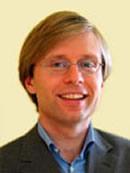 Spring Framework co-founder and project lead
Juergen Hoeller is co-founder of the Spring Framework open source project and has been serving as the project lead and release manager for the core framework since 2003. Juergen is an experienced software architect and consultant with outstanding expertise in code organization, transaction management and enterprise messaging.
Ramnivas Laddad
 Author of AspectJ in Action, Principal at SpringSource
Ramnivas Laddad is a SpringSource Principal Enginner. He has over a decade of experience in applying his enterprise Java and aspect-oriented programming (AOP) expertise to middleware, design automation, networking, web application, user interface, and security projects.
Ramnivas Laddad is a well-known expert in enterprise Java, especially in the area of AOP and Spring. He is the author of AspectJ in Action, the best-selling book on AOP and AspectJ that has been lauded by industry experts for its presentation of practical and innovative AOP applications to solve real-world problems. Ramnivas, a Spring framework committer, is also an active presenter at leading industry events such as JavaOne, JavaPolis, No Fluff Just Stuff, SpringOne, Software Development, and has been an active member of both the AspectJ and Spring communities from their beginnings.
Costin Leau
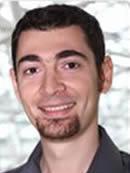 Lead, Spring GemFire, Hadoop, Redis
Costin Leau is an engineer at Elasticsearch, currently working with NoSQL and Big Data technologies. An open-source veteran, Costin led various Spring projects (Spring OSGi, GemFire, Redis, Hadoop) and authored an OSGi spec.
Speaker at various editions of EclipseCon/OSGi DevCon, JavaOne, Devoxx/Javapolis, JavaZone, SpringOne, TSSJS on Java/Hadoop/Spring related topics.
Josh Long
 Developer Advocate
Josh Long is the Spring developer advocate. Josh is the lead author on Apress’ Spring Recipes, 2nd Edition, and a SpringSource committer and contributor. When he's not hacking on code, he can be found at the local Java User Group or at the local coffee shop. Josh likes solutions that push the boundaries of the technologies that enable them. His interests include scalability, BPM, grid processing, mobile computing and so-called "smart" systems. He blogs at blog.springsource.org or joshlong.com.
Jeff Markham
 Senior Systems Engineer at VMware
Jeff is a Senior Systems Engineer for SpringSource with over sixteen years of experience in software engineering. Jeff assists customers with implementing vFabric technologies to create their cloud infrastructure, whether it's in their datacenter, publicly available, or a hybrid of both.
Jeff has consulted with some of the largest companies in the country across a wide variety of industries and projects. Presently, his focus is on modernizing customer applications to take advantage of cloud infrastructures.
When he's not coding, you're likely to find him at some baseball game somewhere.
Dave McCrory
Tom McCuch
 Solution Engineer, Hortonworks
Tom McCuch is a Solution Engineer for Hortonworks with over twenty two years of experience in software engineering. Tom specializes in the architecture, implementation, and deployment of distributed systems requiring high Reliability, Availability, and Scalability (RAS) features. Prior to Hortonworks, Tom worked for SpringSource - handling field architecture for their global accounts including Financial Services, Transportation, and Energy. Tom has consulted enterprise clients across multiple industries in the architecture of mission-critical solutions based on open source software as well as led the engineering of enterprise Java middleware supporting next-generation telecommunications products deployed at tier-1 telcos both in the U.S. and Europe.
Lucas Panjer
 Software Engineer at Tasktop Technologies
Lucas Panjer is a Software Engineer at Tasktop Technologies and is a primary developer of the Code2Cloud project.
Chris Ramsdale
 Google Software Engineer
Chris Ramsdale has worked extensively in the mobile space, starting as a Software Engineer at Motorola in 1997, and then joining local start ups as a Tech Lead and Product Manager. Chris is currently a Product Manager for Google App Engine focused on developer tools and platform services.
Chris Richardson
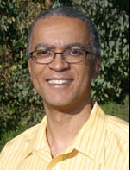 Author of POJOs in Action
Chris Richardson is a developer and architect with over 20 years of experience. He is a Java Champion and the author of POJOs in Action, which describes how to build enterprise Java applications with POJOs and frameworks such as Spring and Hibernate. Chris is the founder of CloudFoundry.com and works on cloud technology. He has a computer science degree from the University of Cambridge in England and lives in Oakland, CA with his wife and three children.
Thomas Risberg
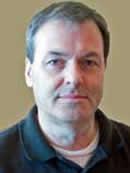 co-author of "Spring Data, Modern Data Access for Enterprise Java"
Thomas Risberg works as a software engineer on the SpringSource team at Pivotal. He is currently a member of the Spring Data team focusing on the Spring XD, Spring for Apache Hadoop and JDBC Extensions projects. Thomas started his career developing custom mainframe banking software and later worked with client server based direct marketing and market research database systems. In 2003 he joined the Spring Framework project, primarily contributing enhancements to the JDBC framework portion.
Gary Russell
 Staff Engineer, SpringSource; Spring Integration Team
Gary has been in software engineering, concentrating on Enterprise Integration, for over 30 years on various platforms, and in the Java space since the late '90s.
He has been developing with the Spring Framework since 2004 and joined SpringSource/VMware in 2009 in a consulting role. From 2009 until the end of 2011 he taught Core Spring and Enterprise Integration with Spring to several hundred developers, as well as providing Enterprise Integration consulting services with Spring Integration, Spring Batch and Core Spring.
He has been a committer on the Spring Integration project for over 3 years and became a full time member of the engineering team in January 2012.
John Simone
Alan Stewart

Alan Stewart is a Senior Member of Technical Staff at VMware and Project Lead of the Spring Roo project. Alan has over twenty-five years of application development experience working for large enterprises in the finance, insurance, and retail industries. He is passionate about making Roo the best enterprise Java development tool available.
Rossen Stoyanchev
 Senior Staff Engineer, VMware
Rossen is a Spring Framework developer focusing on Spring MVC as well as Spring Web Flow. His 17+ year background includes work on trading and risk management software, investment accounting, e-commerce web applications, directory services, among others. Prior to becoming a full-time Spring Framework developer, Rossen spent several years teaching and consulting clients building enterprise Java applications with Spring on a broad range of topics.
Max Tardiveau
 Chief Technology Office, Automated Business Logic
Max Tardiveau has been writing software since the days when the word "software" sounded funny to most people. He holds an M.S. in software engineering from the University of St. Thomas in St. Paul, MN. After working at Unisys on repository development, he joined Versata and consulted around the world on transactional business logic. He then founded Integrity Logic, a software and consulting company specializing in geo-enabled mobile apps, but he never lost his interest in automating software development, which brought him to start ABL with Val Huber.
Gil Tene
 CTO & Co-founder, Azul Systems
Gil Tene is CTO and co-founder of Azul Systems. He has been involved with virtual machine technologies for the past 20 years and has been building Java technology-based products since 1995. Gil pioneered Azul's Continuously Concurrent Compacting Collector (C4), Java Virtualization, Elastic Memory, and various managed runtime and systems stack technologies that combine to deliver the industry's most scalable and robust Java platforms. In 2006 he was named one of the Top 50 Agenda Setters in the technology industry by Silicon.com. Prior to co-founding Azul, Gil held key technology positions at Nortel Networks, Shasta Networks and at Check Point Software Technologies, where he delivered several industry-leading traffic management solutions including the industry's first Firewall-1 based security appliance. He architected operating systems for Stratus Computer, clustering solutions at Qualix/Legato, and served as an officer in the Israeli Navy Computer R and D unit. Gil holds a BSEE from The Technion Israel Institute of Technology, and has been awarded 28 patents in computer-related technologies.
Craig Walls
 Author of Spring in Action
Craig Walls is a senior engineer with SpringSource as the Spring Social project lead and is the author of Spring in Action and XDoclet in Action (both published by Manning) and Modular Java (published by Pragmatic Bookshelf). He's a zealous promoter of the Spring Framework, speaking frequently at local user groups and conferences and writing about Spring and OSGi on his blog. When he's not slinging code, Craig spends as much time as he can with his wife, two daughters, 2 birds and 3 dogs.
James Ward
 Developer Advocate, Typesafe
James Ward (www.jamesward.com) works for Typesafe where he teaches developers the Typesafe Stack (Play Framework, Scala, and Akka) . James frequently presents at conferences around the world such as JavaOne, Devoxx, and many other Java get-togethers. Along with Bruce Eckel, James co-authored First Steps in Flex. He has also published numerous screencasts, blogs, and technical articles. Starting with Pascal and Assembly in the 80′s, James found his passion for writing code. Beginning in the 90′s he began doing web development with HTML, Perl/CGI, then Java. After building a Flex and Java based customer service portal in 2004 for Pillar Data Systems he became a Technical Evangelist for Flex at Adobe. In 2011 James became a Principal Developer Evangelist at Salesforce.com where he taught developers how to deploy apps on the cloud with Heroku. James Tweets as @_JamesWard and posts code at github.com/jamesward.
Rob Winch
 Spring Security Lead
Rob Winch is a Senior Software Engineer at VMware and is the project lead of the Spring Security framework. He is also a committer on the core Spring Framework and co-author of the Spring Security 3.1 book. In the past he has worked in the health care industry, bioinformatics research, high performance computing, and as a web consultant. When he is not sitting in front of a computer he enjoys playing the guitar.
Oleg Zhurakousky
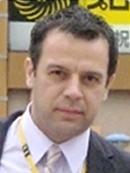 Principal Architect w/Hortonworks
Oleg is a Principal Architect with Hortonworks responsible for architecting scalable BigData solutions using various OpenSource technologies available within and outside the Hadoop ecosystem. Before Hortonworls Oleg was part of the SpringSource/VMWare where he was a core engineer working on Spring Integration framework, leading Spring Integration Scala DSL and contributing to other projects in Spring portfolio. He has 17+ years of experience in software engineering across multiple disciplines including software architecture and design, consulting, business analysis and application development. Oleg has been focusing on professional Java development since 1999. Since 2004 he has been heavily involved in using several open source technologies and platforms across a number of projects around the world and spanning industries such as Teleco, Banking, Law Enforcement, US DOD and others.
As a speaker Oleg presented seminars at dozens of conferences worldwide (i.e.SpringOne, JavaOne, Java Zone, Jazoon, Java2Days, Scala Days, Uberconf, and others).
- NFJS SITES:
- No Fluff Just Stuff
- Uber Conf
- NFJS One
- SpringOne 2GX
- Rich Web Experience
- Continuous Delivery Experience
- SPRINGSOURCE SITES:
- Springsource.com
- Springsource.org