SpringOne 2GX 2011
Chicago, October 25-28, 2011

For Members

 Magnificent Mile Marriott
Downtown Chicago
540 North Michigan Ave.
Chicago, Illinois 60611
1 (800) 228-9290
[ Map it ]
Dave Klein
Author of 'Grails: A Quick-Start Guide'


Dave is a consultant helping organizations of all sizes to develop applications more quickly (and have more fun doing it) with Grails. Dave has been involved in enterprise software development for the past 15 years. He has worked as a developer, architect, project manager, mentor and trainer. Dave has presented at user groups and national conferences. He is also the founder of the Capital Java User Group in Madison, Wisconsin, the Gateway Groovy Users in St. Louis, MO, and the author of Grails: A Quick-Start Guide, published by the Pragmatic Programmers. . Dave's Groovy and Grails related thoughts can be found at http://dave-klein.blogspot.com
Blog
?berConf - Exceeding Expectations
Posted 2010-06-15 12:47:23.0
ÜberConf kicked off yesterday with the pre-conference iPhone/iPad workshop. The workshop was completely full, with just over 90 people. The view from the front of the room was pretty impressive -- all those glowing applemore »Recording of Grails / Terracotta webinar
Posted 2010-05-12 05:47:44.0
In case you missed it and in case you're interested, Terracotta has posted a recording of the webinar that Mike Allen and I held a couple weeks ago. You can catch it in all of its glory (or lack thereof :) at http://bit.ly/scaling_grailsmore »Presentations
GORM: Object Persistence Done Right
Grails object relational mapping (GORM) is one of the most powerful features of the Grails framework. Project bootstrapping and CRUD scaffolding are nice things to get you started, but GORM continues to pay off throughout the development of an applicatimore »GORM: Object Persistence Done Right

 By Dave Klein
Grails object relational mapping (GORM) is one of the most powerful features of the Grails framework. Project bootstrapping and CRUD scaffolding are nice things to get you started, but GORM continues to pay off throughout the development of an application. Even maintenance tasks become simpler and more fun with GORM.
In this presentation we’ll discover what GORM is and what it does for us. We’ll cover dynamic domain class methods, dynamic finders, one-to-many and many-to-many relationships, Hibernate Criteria Builders and more. We’ll also take a look at some things to watch out for since, after all, this is Object Relational Mapping we’re talking about.

Books
by Dave Klein
 List Price:
 $32.95
Price: $21.75
You Save: $11.20 (34%)
-
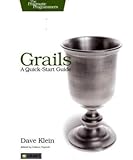
Grails is a full stack web development framework that enables you to build complete web applications in a fraction of the time and with less code than other frameworks.
In Grails: A Quick-Start Guide, you'll see how to use Grails by iteratively building an unique, working application. By the time we're done, you'll have built and deployed a real, functioning website.
Along the way, we'll learn about domain classes, controllers, and GSP views. We'll see how Grails allows us to use powerful frameworks like Spring and Hibernate without even knowing it.
Using this hands-on, pragmatic approach, we'll explore topics such as AJAX in Grails, custom tags, and plugins. We'll dig into Grails' powerful view technology, Groovy Server Pages, and see how we can easily leverage the help given to us by scaffolding to create custom user interfaces faster than you would have thought possible.
With Grails, you can get a lot done with little effort. With this book, you'll get a lot done as well. It's time to bring the fun back into web programming. Get started with Grails today.
List Price: $32.95
Price: $21.75
You Save: $11.20 (34%)
Price: $21.75
You Save: $11.20 (34%)
-
Grails is a full stack web development framework that enables you to build complete web applications in a fraction of the time and with less code than other frameworks.
In Grails: A Quick-Start Guide, you'll see how to use Grails by iteratively building an unique, working application. By the time we're done, you'll have built and deployed a real, functioning website.
Along the way, we'll learn about domain classes, controllers, and GSP views. We'll see how Grails allows us to use powerful frameworks like Spring and Hibernate without even knowing it.
Using this hands-on, pragmatic approach, we'll explore topics such as AJAX in Grails, custom tags, and plugins. We'll dig into Grails' powerful view technology, Groovy Server Pages, and see how we can easily leverage the help given to us by scaffolding to create custom user interfaces faster than you would have thought possible.
With Grails, you can get a lot done with little effort. With this book, you'll get a lot done as well. It's time to bring the fun back into web programming. Get started with Grails today.
- NFJS SITES:
- No Fluff Just Stuff
- Uber Conf
- NFJS One
- SpringOne 2GX
- Rich Web Experience
- Project Automation Experience
- SPRINGSOURCE SITES:
- Springsource.com
- Springsource.org
© 2011 No Fluff, Just Stuff TM and SpringSource, a division of VMware. All rights reserved. Java is a registered trademark of Oracle.