NFJS Bookstore


Price: $31.49
You Save: $18.50 (37%)
Spring Recipes: A Problem-Solution Approach
With over 3 million users/developers, Spring Framework is the leading “out of the box” Java framework. Spring addresses and offers simple solutions for most aspects of your Java/Java EE application development, and guides you to use industry best practices to design and implement your applications.
The release of Spring Framework 3 has ushered in many improvements and new features. Spring Recipes: A Problem-Solution Approach, Second Edition continues upon the bestselling success of the previous edition but focuses on the latest Spring 3 features for building enterprise Java applications. This book provides elementary to advanced code recipes to account for the following, found in the new Spring 3:
- Spring fundamentals: Spring IoC container, Spring AOP/ AspectJ, and more
- Spring enterprise: Spring Java EE integration, Spring Integration, Spring Batch, jBPM with Spring, Spring Remoting, messaging, transactions, scaling using Terracotta and GridGrain, and more.
- Spring web: Spring MVC, Spring Web Flow 2, Spring Roo, other dynamic scripting, integration with popular Grails Framework (and Groovy), REST/web services, and more.
This book guides you step by step through topics using complete and real-world code examples. Instead of abstract descriptions on complex concepts, you will find live examples in this book. When you start a new project, you can consider copying the code and configuration files from this book, and then modifying them for your needs. This can save you a great deal of work over creating a project from scratch!
What you’ll learn
- How to use the IoC container and the Spring application context to best effect.
- Spring’s AOP support, both classic and new Spring AOP, integrating Spring with AspectJ, and load-time weaving.
- Simplifying data access with Spring (JDBC, Hibernate, and JPA) and managing transactions both programmatically and declaratively.
- Spring’s support for remoting technologies (RMI, Hessian, Burlap, and HTTP Invoker), EJB, JMS, JMX, email, batch, scheduling, and scripting languages.
- Integrating legacy systems with Spring, building highly concurrent, grid-ready applications using Gridgain and Terracotta Web Apps, and even creating cloud systems.
- Building modular services using OSGi with Spring DM and Spring Dynamic Modules and SpringSource dm Server.
- Delivering web applications with Spring Web Flow, Spring MVC, Spring Portals, Struts, JSF, DWR, the Grails framework, and more.
- Developing web services using Spring WS and REST; contract-last with XFire, and contract–first through Spring Web Services.
- Spring’s unit and integration testing support (on JUnit 3.8, JUnit 4, and TestNG).
- How to secure applications using Spring Security.
Who this book is for
This book is for Java developers who would like to rapidly gain hands-on experience with Java/Java EE development using the Spring framework. If you are already a developer using Spring in your projects, you can also use this book as a reference—you’ll find the code examples very useful.
Table of Contents
- Introduction to Spring
- Advanced Spring IoC Container
- Spring AOP and AspectJ Support
- Scripting in Spring
- Spring Security
- Integrating Spring with Other Web Frameworks
- Spring Web Flow
- Spring @MVC
- Spring RESTSpring and Flex
- Grails
- Spring Roo
- Spring Testing
- Spring Portlet MVC Framework
- Data Access
- Transaction Management in Spring
- EJB, Spring Remoting, and Web Services
- Spring in the Enterprise
- Messaging
- Spring Integration
- Spring Batch
- Spring on the Grid
- jBPM and Spring
- OSGi and Spring
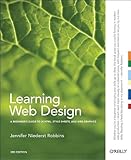
Price: $26.99
You Save: $18.00 (40%)
Learning Web Design: A Beginner's Guide to (X)HTML, StyleSheets, and Web Graphics
Everything you need to know to create professional web sites is right here. Learning Web Design starts from the beginning -- defining how the Web and web pages work -- and builds from there. By the end of the book, you'll have the skills to create multi-column CSS layouts with optimized graphic files, and you'll know how to get your pages up on the Web.
This thoroughly revised edition teaches you how to build web sites according to modern design practices and professional standards. Learning Web Design explains:
- How to create a simple (X)HTML page, how to add links and images
- Everything you need to know about web standards -- (X)HTML, DTDs, and more
- Cascading Style Sheets -- formatting text, colors and backgrounds, using the box model, page layout, and more
- All about web graphics, and how to make them lean and mean through optimization
- The site development process, from start to finish
- Getting your pages on the Web -- hosting, domain names, and FTP

Price: $19.77
You Save: $10.18 (34%)
Agile Retrospectives: Making Good Teams Great
See how to mine the experience of your software development team continually throughout the life of the project. The tools and recipes in this book will help you uncover and solve hidden (and not-so-hidden) problems with your technology, your methodology, and those difficult "people" issues on your team.
Project retrospectives help teams examine what went right and what went wrong on a project. But traditionally, retrospectives (also known as "post-mortems") are only helpful at the end of the project--too late to help. You need agile retrospectives that are iterative and incremental. You need to accurately find and fix problems to help the team today.
Now, Derby and Larsen show you the tools, tricks, and tips you need to fix the problems you face on a software development project on an on-going basis. You'll see how to architect retrospectives in general, how to design them specifically for your team and organization, how to run them effectively, how to make the needed changes, and how to scale these techniques up. You'll learn how to deal with problems, and implement solutions effectively throughout the project--not just at the end.
With regular tune-ups, your team will hum like a precise, world-class orchestra.

Price: $35.83
You Save: $24.16 (40%)
Java Concurrency in Practice
"I was fortunate indeed to have worked with a fantastic team on the design and implementation of the concurrency features added to the Java platform in Java 5.0 and Java 6. Now this same team provides the best explanation yet of these new features, and of concurrency in general. Concurrency is no longer a subject for advanced users only. Every Java developer should read this book."
--Martin Buchholz
JDK Concurrency Czar, Sun Microsystems
"For the past 30 years, computer performance has been driven by Moore's Law; from now on, it will be driven by Amdahl's Law. Writing code that effectively exploits multiple processors can be very challenging. Java Concurrency in Practice provides you with the concepts and techniques needed to write safe and scalable Java programs for today's--and tomorrow's--systems."
--Doron Rajwan
Research Scientist, Intel Corp
"This is the book you need if you're writing--or designing, or debugging, or maintaining, or contemplating--multithreaded Java programs. If you've ever had to synchronize a method and you weren't sure why, you owe it to yourself and your users to read this book, cover to cover."
--Ted Neward
Author of Effective Enterprise Java
"Brian addresses the fundamental issues and complexities of concurrency with uncommon clarity. This book is a must-read for anyone who uses threads and cares about performance."
--Kirk Pepperdine
CTO, JavaPerformanceTuning.com
"This book covers a very deep and subtle topic in a very clear and concise way, making it the perfect Java Concurrency reference manual. Each page is filled with the problems (and solutions!) that programmers struggle with every day. Effectively exploiting concurrency is becoming more and more important now that Moore's Law is delivering more cores but not faster cores, and this book will show you how to do it."
--Dr. Cliff Click
Senior Software Engineer, Azul Systems
"I have a strong interest in concurrency, and have probably written more thread deadlocks and made more synchronization mistakes than most programmers. Brian's book is the most readable on the topic of threading and concurrency in Java, and deals with this difficult subject with a wonderful hands-on approach. This is a book I am recommending to all my readers of The Java Specialists' Newsletter, because it is interesting, useful, and relevant to the problems facing Java developers today."
--Dr. Heinz Kabutz
The Java Specialists' Newsletter
"I've focused a career on simplifying simple problems, but this book ambitiously and effectively works to simplify a complex but critical subject: concurrency. Java Concurrency in Practice is revolutionary in its approach, smooth and easy in style, and timely in its delivery--it's destined to be a very important book."
--Bruce Tate
Author of Beyond Java
"Java Concurrency in Practice is an invaluable compilation of threading know-how for Java developers. I found reading this book intellectually exciting, in part because it is an excellent introduction to Java's concurrency API, but mostly because it captures in a thorough and accessible way expert knowledge on threading not easily found elsewhere."
--Bill Venners
Author of Inside the Java Virtual Machine
Threads are a fundamental part of the Java platform. As multicore processors become the norm, using concurrency effectively becomes essential for building high-performance applications. Java SE 5 and 6 are a huge step forward for the development of concurrent applications, with improvements to the Java Virtual Machine to support high-performance, highly scalable concurrent classes and a rich set of new concurrency building blocks. In Java Concurrency in Practice, the creators of these new facilities explain not only how they work and how to use them, but also the motivation and design patterns behind them.
However, developing, testing, and debugging multithreaded programs can still be very difficult; it is all too easy to create concurrent programs that appear to work, but fail when it matters most: in production, under heavy load. Java Concurrency in Practice arms readers with both the theoretical underpinnings and concrete techniques for building reliable, scalable, maintainable concurrent applications. Rather than simply offering an inventory of concurrency APIs and mechanisms, it provides design rules, patterns, and mental models that make it easier to build concurrent programs that are both correct and performant.
This book covers:
- Basic concepts of concurrency and thread safety
- Techniques for building and composing thread-safe classes
- Using the concurrency building blocks in java.util.concurrent
- Performance optimization dos and don'ts
- Testing concurrent programs
- Advanced topics such as atomic variables, nonblocking algorithms, and the Java Memory Model
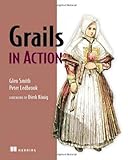
Price: $27.96
You Save: $17.03 (38%)
Grails in Action
For web developers used to wrestling with Java and XML, Grails is a breath of fresh air. Developers are instantly productive, picking up all the benefits of the Ruby-based Rails framework without giving up any of the power of Java.
Grails in Action is a comprehensive look at Grails for Java developers. It covers the nuts and bolts of the core Grails components and is jam-packed with tutorials, techniques, and insights from the trenches.
The book starts with an overview of Grails and how it can help you get your web dev mojo back. Then it walks readers through a Twitter-style social networking app-built in Grails, of course-where they implement high-interest features like mashups, AJAX/JSON, animation effects, full text search, rounded corners, and lots of visual goodness. The book also covers using Grails with existing Java technology, like Spring, Hibernate, and EJBs.
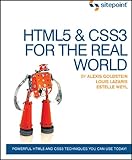
Price: $23.97
You Save: $15.98 (40%)
HTML5 & CSS3 For The Real World
HTML5 and CSS3 for the Real World is ideal for any web designer or developer who wants to start using the latest generation of web technologies in their everyday work.
This book will teach you how to:
- understand the new semantic markup available in HTML5
- use CSS3 to make sites beautiful without sacrificing clean markup or resorting to complex workarounds
- employ native HTML5 video and audio in your pages
- use web fonts to enrich a site's typography
- make web applications accessible using WAI-ARIA
- make the most of the new HTML form elements.
It also features:
- details on all the new HTML5 and CSS3 elements and features
- information on the current level of browser support
- advice for creating great experiences for all users thanks to progressive enhancement.

Price: $29.99
You Save: $20.00 (40%)
Spring in Action
Summary
Totally revised for Spring 3.0, this book is a hands-on guide to the Spring Framework. It covers the latest features, tools, and practices including Spring MVC, REST, Security, Web Flow, and more. Following short code snippets and an ongoing example developed throughout the book, you'll learn how to build simple and efficient J2EE applications.
About the TechnologySpring Framework is required knowledge for Java developers, and Spring 3.0 introduces powerful new features like SpEL, the Spring Expression Language, new annotations for the IoC container, and much-needed support for REST. Whether you're just discovering Spring or you want to absorb the new 3.0 features, there's no better way to master Spring than this book.
About the BookSpring in Action, Third Edition continues the practical, hands-on style of the previous bestselling editions. Author Craig Walls has a special knack for crisp and entertaining examples that zoom in on the features and techniques you really need. This edition highlights the most important aspects of Spring 3.0 including REST, remote services, messaging, Security, MVC, Web Flow, and more.
What's Inside- Using annotations to reduce configuration
- Working with RESTful resources
- Spring Expression Language (SpEL)
- Security, Web Flow, and more
Nearly 100,000 developers have used this book to learn Spring!
Table of Contents- Springing into action
- Wiring beans
- Minimizing XML configuration in Spring
- Aspect-oriented Spring
- Hitting the database
- Managing transactions
- Building web applications with Spring MVC
- Working with Spring Web Flow
- Securing Spring
- Working with remote services
- Giving Spring some REST
- Messaging in Spring
- Managing Spring beans with JMX
- Odds and ends
PART 1 CORE SPRING
PART 2 SPRING APPLICATION ESSENTIALS
PART 3 INTEGRATING SPRING

Price: $31.49
You Save: $18.50 (37%)
Groovy in Action
Groovy, the brand-new language for the Java platform, brings to Java many of the features that have made Ruby popular. Groovy in Action is a comprehensive guide to Groovy programming, introducing Java developers to the new dynamic features that Groovy provides. To bring you Groovy in Action, Manning again went to the source by working with a team of expert authors including both members and the Manager of the Groovy Project team. The result is the true definitive guide to the new Groovy language.
Groovy in Action introduces Groovy by example, presenting lots of reusable code while explaining the underlying concepts. Java developers new to Groovy find a smooth transition into the dynamic programming world. Groovy experts gain a solid reference that challenges them to explore Groovy deeply and creatively.
Because Groovy is so new, most readers will be learning it from scratch. Groovy in Action quickly moves through the Groovy basics, including:
Readers are presented with rich and detailed examples illustrating Groovy's enhancements to Java, including
Groovy in Action then demonstrates how to Integrate Groovy with XML, and provides,
An additional bonus is a chapter dedicated to Grails, the Groovy Web Application Framework.
Early PDF chapters of Groovy in Action are available from the Manning Early Access Program (MEAP) at http://www.manning.com/koenig. As part of this program, readers can also discuss the early manuscript with the author and help shape the manuscript as it's being developed by joining the Author Forum.
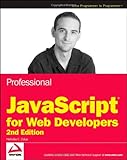
Price: $31.49
You Save: $18.50 (37%)
Professional JavaScript for Web Developers (Wrox Programmer to Programmer)
Professional JavaScript for Web Developers, 2nd Edition, provides a developer-level introduction along with the more advanced and useful features of JavaScript.Starting at the beginning, the book explores how JavaScript originated and evolved into what it is today. A detailed discussion of the components that make up a JavaScript implementation follows, with specific focus on standards such as ECMAScript and the Document Object Model (DOM). The differences in JavaScript implementations used in different popular web browsers are also discussed.
Building on that base, the book moves on to cover basic concepts of JavaScript including its version of object-oriented programming, inheritance, and its use in various markup languages such as HTML. An in-depth examination of events and event handling is followed by an exploration of browser detection techniques and a guide to using regular expressions in JavaScript. The book then takes all this knowledge and applies it to creating dynamic user interfaces.
The last part of the book is focused on advanced topics, including performance/memory optimization, best practices, and a look at where JavaScript is going in the future.
This book is aimed at three groups of readers:
- Experienced developers familiar with object-oriented programming who are looking to learn JavaScript as it relates to traditional OO languages such as Java and C++
- Web application developers attempting to enhance the usability of their web sites and web applications
- Novice JavaScript developers aiming to better understand the language
In addition, familiarity with the following related technologies is a strong indicator that this book is for you:
- Java
- PHP
- ASP.NET
- HTML
- CSS
- XML
This book is not aimed at beginners who lack a basic computer science background or those looking to add some simple user interactions to web sites. These readers should instead refer to Wrox’s Beginning JavaScript, 3rd Edition (Wiley, 2007).
This book covers:
- What Is JavaScript?—Explains the origins of JavaScript: where it came from, how it evolved, and what it is today. Concepts introduced include the relationship between JavaScript and ECMAScript, the Document Object Model (DOM), and the Browser Object Model (BOM). A discussion of the relevant standards from the European Computer Manufacturer’s Association (ECMA) and the World Wide Web Consortium (W3C) is also included.
- JavaScript in HTML—Examines how JavaScript is used in conjunction with HTML to create dynamic web pages. Introduces the various ways of embedding JavaScript into a page, including a discussion surrounding the JavaScript content-type and its relationship to the element.
- Language Basics—Introduces basic language concepts, including syntax and flow control statements. Explains the syntactic similarities of JavaScript and other C-based languages and points out the differences. Type coercion is introduced as it relates to built-in operators.
- Variables, Scope, and Memory—Explores how variables are handled in JavaScript given their loosely typed nature. A discussion about the differences between primitive and reference values is included, as is information about execution context as it relates to variables. Also, a discussion about garbage collection in JavaScript explains how memory is reclaimed when variables go out of scope.
- Reference Types—Covers all of the details regarding JavaScript's built-in reference types, such as Object and Array. Each reference type described in ECMA-262 is discussed both in theory and how they relate to browser implementations.
- Object-Oriented Programming—Explains how to use object-oriented programming in JavaScript. Since JavaScript has no concept of classes, several popular techniques are explored for object creation and inheritance. Also covered is the concept of function prototypes and how that relates to an overall OO approach.
- Anonymous Functions—Explores one of the most powerful aspects of JavaScript: anonymous functions. Topics include closures, how the this object works, the module pattern, and creating private object members.
- The Browser Object Model—Introduces the Browser Object Model (BOM), which is responsible for objects allowing interaction with the browser itself. Each of the BOM objects is covered, including window, document, location, navigator, and screen.
- Client Detection—Explains various approaches to detecting the client machine and its capabilities. Different techniques include capability detection and user-agent string detection. Each approach is discussed for pros and cons as well as situational appropriateness.
- The Document Object Model—Introduces the Document Object Model (DOM) objects available in JavaScript as defined in DOM Level 1. A brief introduction to XML and its relationship to the DOM gives way to an in-depth exploration of the entire DOM and how it allows developers to manipulate a page.
- DOM Levels 2 and 3 Explains how DOM Levels 2 and 3 augmented the DOM with additional properties, methods, and objects. Compatibility issues between Internet Explorer and other browsers are discussed.
- Events—Explains the nature of events in JavaScript, where they originated, legacy support, and how the DOM redefined how events should work. A variety of devices are covered, including the Wii and iPhone.
- Scripting Forms—Looks at using JavaScript to enhance form interactions and work around browser limitations. Discussion focuses on individual form elements such as text boxes and select boxes and on data validation and manipulation.
- Error Handling and Debugging—Discusses how browsers handle errors in JavaScript code and presents several ways to handle errors. Debugging tools and techniques are also discussed for each browser, including recommendations for simplifying the debugging process.
- XML in JavaScript—Presents the features of JavaScript used to read and manipulate eXtensible Markup Language (XML) data. Explains the differences in support and objects in various web browsers, and offers suggestions for easier cross-browser coding. This also covers the use of eXtensible Stylesheet Language Transformations (XSLT) to transform XML data on the client.
- ECMAScript for XML—Discusses the ECMAScript for XML (E4X) extension to JavaScript, which is designed to simplify working with XML. Explains the advantages of E4X over using the DOM for XML manipulation.
- Ajax and JSON—Looks at common Ajax techniques, including the use of the XMLHttpRequest object and Internet Explorer's XDomainRequest object for cross-domain Ajax. Explains the differences in browser implementations and support as well as recommendations for usage.
- Advanced Techniques—Dives into some of the more complex JavaScript patterns, including function currying, partial function application, and dynamic functions. Also covers creating a custom event framework to enable simple event support for custom objects.
- Client-Side Storage—Discusses the various techniques for storing data on the client machine. Begins with a discussion of the most commonly supported feature, cookies, and then discusses newer functionality such as DOM storage.
- Best Practices—Explores approaches to working with JavaScript in an enterprise environment. Techniques for better maintainability are discussed, including coding techniques, formatting, and general programming practices. Execution performance is discussed and several techniques for speed optimization are introduced. Last, deployment issues are discussed, including how to create a build process.
- Upcoming APIs—Introduces APIs being created to augment JavaScript in the browser. Even though these APIs aren't yet complete or fully implemented, they are on the horizon and browsers have already begun partially implementing their features. Includes the Selectors API and HTML 5.
- The Evolution of JavaScript—Looks into the future of JavaScript to see where the language is headed. ECMAScript 3.1, ECMAScript 4, and ECMAScript Harmony are discussed.

Price: $31.49
You Save: $18.50 (37%)
Head First Software Development
Even the best developers have seen well-intentioned software projects fail -- often because the customer kept changing requirements, and end users didn't know how to use the software you developed. Instead of surrendering to these common problems, let Head First Software Development guide you through the best practices of software development. Before you know it, those failed projects will be a thing of the past.
With its unique visually rich format, this book pulls together the hard lessons learned by expert software developers over the years. You'll gain essential information about each step of the software development lifecycle -- requirements, design, coding, testing, implementing, and maintenance -- and understand why and how different development processes work.
This book is for you if you are:
- Tired of your customers assuming you're psychic. You'll learn not only how to get good requirements, but how to make sure you're always building the software that customers want (even when they're not sure themselves)
- Wondering when the other 15 programmers you need to get your project done on time are going to show up. You'll learn how some very simple scheduling and prioritizing will revolutionize your success rate in developing software.
- Confused about being rational, agile, or a tester. You'll learn not only about the various development methodologies out there, but how to choose a solution that's right for your project.
- Confused because the way you ran your last project worked so well, but failed miserably this time around. You'll learn how to tackle each project individually, combine lessons you've learned on previous projects with cutting-edge development techniques, and end up with great software on every project.

Price: $38.26
You Save: $6.73 (15%)
REST in Practice: Hypermedia and Systems Architecture
Why don't typical enterprise projects go as smoothly as projects you develop for the Web? Does the REST architectural style really present a viable alternative for building distributed systems and enterprise-class applications?
In this insightful book, three SOA experts provide a down-to-earth explanation of REST and demonstrate how you can develop simple and elegant distributed hypermedia systems by applying the Web's guiding principles to common enterprise computing problems. You'll learn techniques for implementing specific Web technologies and patterns to solve the needs of a typical company as it grows from modest beginnings to become a global enterprise.
- Learn basic Web techniques for application integration
- Use HTTP and the Web’s infrastructure to build scalable, fault-tolerant enterprise applications
- Discover the Create, Read, Update, Delete (CRUD) pattern for manipulating resources
- Build RESTful services that use hypermedia to model state transitions and describe business protocols
- Learn how to make Web-based solutions secure and interoperable
- Extend integration patterns for event-driven computing with the Atom Syndication Format and implement multi-party interactions in AtomPub
- Understand how the Semantic Web will impact systems design

Price: $31.01
You Save: $15.98 (34%)
The Definitive Guide to Grails (Expert's Voice in Web Development)
Java professionals long the productivity gains a framework like Ruby on Rails provides, without having to leave the Java Platform. Grails provides this missing link by bringing the best aspects from Grails while embracing the Java platform and language itself. Grails is an open source Java/Groovy-based Rails-like framework that gives dynamic Java a boost; so, Java developers now have a viable Java-based solution instead of considering the non-Java-based Ruby on Rails, which can create more problems than it solves. Grails, sometimes called Groovy on Rails, is an emerging area of much interest with already anticipated available support from such key Java projects as Spring, Oracle, and more.
The Definitive Guide to Grails, Second Edition, will be the first and definitive book on Grails written by the founder and leads of Grails.

Price: $29.69
You Save: $15.30 (34%)
The Zen of CSS Design: Visual Enlightenment for the Web
Proving once and for all that standards-compliant design does not equal dull design, this inspiring tome uses examples from the landmark CSS Zen Garden site as the foundation for discussions on how to create beautiful, progressive CSS-based Web sites. By using the Zen Garden sites as examples of how CSS design techniques and approaches can be applied to specific Web challenges, authors Dave Shea and Molly Holzschlag provide an eye-opening look at the range of design methods made possible by CSS (Cascading Style Sheets). By the time you've finished perusing the volume, you'll have a new understanding of the graphically rich, fully accessible sites that CSS design facilitates. In sections on design, layout, imagery, typography, effects, and themes, Dave and Molly take you through every phase of the design process--from striking a sensible balance between text and graphics to creating eye-popping special effects (no scripting required).
Price: $29.54
You Save: $20.45 (41%)
Designing Web Interfaces: Principles and Patterns for Rich Interactions
Want to learn how to create great user experiences on today's Web? In this book, UI experts Bill Scott and Theresa Neil present more than 75 design patterns for building web interfaces that provide rich interaction. Distilled from the authors' years of experience at Sabre, Yahoo!, and Netflix, these best practices are grouped into six key principles to help you take advantage of the web technologies available today. With an entire section devoted to each design principle, Designing Web Interfaces helps you:
- Make It Direct-Edit content in context with design patterns for In Page Editing, Drag & Drop, and Direct Selection
- Keep It Lightweight-Reduce the effort required to interact with a site by using In Context Tools to leave a "light footprint"
- Stay on the Page-Keep visitors on a page with overlays, inlays, dynamic content, and in-page flow patterns
- Provide an Invitation-Help visitors discover site features with invitations that cue them to the next level of interaction
- Use Transitions-Learn when, why, and how to use animations, cinematic effects, and other transitions
- React Immediately-Provide a rich experience by using lively responses such as Live Search, Live Suggest, Live Previews, and more
Designing Web Interfaces illustrates many patterns with examples from working websites. If you need to build or renovate a website to be truly interactive, this book gives you the principles for success.
Price: $37.49
You Save: $17.50 (32%)
Design Patterns in Ruby
Praise for Design Patterns in Ruby
"Design Patterns in Ruby documents smart ways to resolve many problems that Ruby developers commonly encounter. Russ Olsen has done a great job of selecting classic patterns and augmenting these with newer patterns that have special relevance for Ruby. He clearly explains each idea, making a wealth of experience available to Ruby developers for their own daily work."
—Steve Metsker, Managing Consultant with Dominion Digital, Inc.
"This book provides a great demonstration of the key 'Gang of Four' design patterns without resorting to overly technical explanations. Written in a precise, yet almost informal style, this book covers enough ground that even those without prior exposure to design patterns will soon feel confident applying them using Ruby. Olsen has done a great job to make a book about a classically 'dry' subject into such an engaging and even occasionally humorous read."
—Peter Cooper
"This book renewed my interest in understanding patterns after a decade of good intentions. Russ picked the most useful patterns for Ruby and introduced them in a straightforward and logical manner, going beyond the GoF's patterns. This book has improved my use of Ruby, and encouraged me to blow off the dust covering the GoF book."
—Mike Stok
"Design Patterns in Ruby is a great way for programmers from statically typed objectoriented languages to learn how design patterns appear in a more dynamic, flexible language like Ruby."
—Rob Sanheim, Ruby Ninja, Relevance
Most design pattern books are based on C++ and Java. But Ruby is different—and the language's unique qualities make design patterns easier to implement and use. In this book, Russ Olsen demonstrates how to combine Ruby's power and elegance with patterns, and write more sophisticated, effective software with far fewer lines of code.
After reviewing the history, concepts, and goals of design patterns, Olsen offers a quick tour of the Ruby language—enough to allow any experienced software developer to immediately utilize patterns with Ruby. The book especially calls attention to Ruby features that simplify the use of patterns, including dynamic typing, code closures, and "mixins" for easier code reuse.
Fourteen of the classic "Gang of Four" patterns are considered from the Ruby point of view, explaining what problems each pattern solves, discussing whether traditional implementations make sense in the Ruby environment, and introducing Ruby-specific improvements. You'll discover opportunities to implement patterns in just one or two lines of code, instead of the endlessly repeated boilerplate that conventional languages often require.
Design Patterns in Ruby also identifies innovative new patterns that have emerged from the Ruby community. These include ways to create custom objects with metaprogramming, as well as the ambitious Rails-based "Convention Over Configuration" pattern, designed to help integrate entire applications and frameworks.
Engaging, practical, and accessible, Design Patterns in Ruby will help you build better software while making your Ruby programming experience more rewarding.
Price: $29.54
You Save: $15.45 (34%)
Seam in Action
JBoss Seam is an exciting new application framework based on the Java EE platform that is used to build rich, web-based business applications. Seam is rapidly capturing the interest of Java enterprise developers because of its focus on simplicity, ease of use, transparent integration, and scalability.
Seam in Action offers a practical and in-depth look at JBoss Seam. The book puts Seam head-to-head with the complexities in the Java EE architecture. The author presents an unbiased view of Seam from outside the walls of RedHat/JBoss, focusing on such topics as Spring integration and deployment to alternative application servers to steer clear of vendor lock-in. By the end of the book, you should expect to not only gain a deep understanding of Seam, but also come away with the confidence to teach the material to others.
To start off, you will see a working Java EE-compliant application come together by the end of the second chapter. As you progress through the book, you will discover how Seam eliminates unnecessary layers and configurations, solves the most common JSF pain points, and establishes the missing link between JSF, EJB 3 and JavaBean components. The author also shows you how Seam opens doors for you to incorporate technologies you previously have not had time to learn, such as business processes and stateful page flows (jBPM), Ajax remoting, PDF generation, asynchronous tasks, and more.
All too often, developers spend a majority of their time integrating disparate technologies, manually tracking state, struggling to understand JSF, wrestling with Hibernate exceptions, and constantly redeploying applications, rather than on the logic pertaining to the business at hand. Seam in Action dives deep into thorough explanations of how Seam eliminates these non-core tasks by leveraging configuration by exception, Java 5 annotations, and aspect-oriented programming.
Price: $31.49
You Save: $18.50 (37%)
Ant in Action: Covers Ant 1.7 (Manning)
This second edition of a Manning bestseller has been revised and re-titled to fit the 'In Action' Series by Steve Loughran, an Ant project committer. Ant in Action introduces Ant and how to use it for test-driven Java application development. Ant itself is moving to v1.7, a major revision, at the end of 2006 so the timing for the book is right. A single application of increasing complexity, followed throughout the book, shows how an application evolves and how to handle the problems of building and testing. Reviewers have praised the book's coverage of large-projects, Ant's advanced features, and the details and depth of the discussion-all unavailable elsewhere.
This is a major revision with the second half of the book completely new, including:
Price: $37.79
You Save: $22.20 (37%)
Core JavaServer Faces (3rd Edition)
JavaServer Faces (JSF) is the standard Java EE technology for building web user interfaces. It provides a powerful framework for developing server-side applications, allowing you to cleanly separate visual presentation and application logic. JSF 2.0 is a major upgrade, which not only adds many useful features but also greatly simplifies the programming model by using annotations and “convention over configuration” for common tasks.
To help you quickly tap into the power of JSF 2.0, the third edition of Core JavaServer™ Faces has been completely updated to make optimum use of all the new features. The book includes
- Three totally new chapters on using Facelets tags for templating, building composite components, and developing Ajax applications
- Guidance on building robust applications with minimal hand coding and maximum productivity–without requiring any knowledge of servlets or other low-level “plumbing”
- A complete explanation of the basic building blocks–from using standard JSF tags, to working with data tables, and converting and validating input
- Coverage of advanced tasks, such as event handling, extending the JSF framework, and connecting to external services
- Solutions to a variety of common challenges, including notes on debugging and troubleshooting, in addition to implementation details and working code for features that are missing from JSF
- Proven solutions, hints, tips, and “how-tos” show you how to use JSF effectively in your development projects
Core JavaServer™ Faces, Third Edition, provides everything you need to master the powerful and time-saving features of JSF 2.0 and is the perfect guide for programmers developing Java EE 6 web apps on Glassfish or another Java EE 6-compliant application servers, as well as servlet runners such as Tomcat 6.

Price: $27.00
You Save: $8.99 (25%)
Continuous Integration: Improving Software Quality and Reducing Risk
This is the eBook version of the printed book.
For any software developer who has spent days in “integration hell,” cobbling together myriad software components, Continuous Integration: Improving Software Quality and Reducing Risk illustrates how to transform integration from a necessary evil into an everyday part of the development process. The key, as the authors show, is to integrate regularly and often using continuous integration (CI) practices and techniques.
The authors first examine the concept of CI and its practices from the ground up and then move on to explore other effective processes performed by CI systems, such as database integration, testing, inspection, deployment, and feedback. Through more than forty CI-related practices using application examples in different languages, readers learn that CI leads to more rapid software development, produces deployable software at every step in the development lifecycle, and reduces the time between defect introduction and detection, saving time and lowering costs. With successful implementation of CI, developers reduce risks and repetitive manual processes, and teams receive better project visibility.
The book covers
- How to make integration a “non-event” on your software development projects
- How to reduce the amount of repetitive processes you perform when building your software
- Practices and techniques for using CI effectively with your teams
- Reducing the risks of late defect discovery, low-quality software, lack of visibility, and lack of deployable software
- Assessments of different CI servers and related tools on the market
The book’s companion Web site, www.integratebutton.com, provides updates and code examples.

Price: $23.98
You Save: $16.01 (40%)
Java Message Service
The Java Message Service (JMS) provides a way for the components of a distributed application to talk asynchronously, or for welding together legacy enterprise systems. Think of it as application-to-application e-mail. Unlike COM, JMS uses one or more JMS servers to handle the messages on a store-and-forward basis, so that the loss of one or more components doesn't bring the whole distributed application to a halt.JMS consists of a set of messaging APIs that enable two types of messaging, publish-and-subscribe (one-to-many) and point-to-point (one-to-one). The highly lucid explanation of the ways in which these work makes the technical content a lot more approachable. In practice, however, Java Message Service is still a book for Java programmers who have some business programming experience. You need the background.
After a simple JMS demonstration in which you create a chat application using both messaging types, the authors dissect JMS message structures, explore both types in detail, and then move on to real-world considerations. These include reliability, security, deployment, and a rundown of various JMS server providers. The appendices list and describe the JMS API, and provide message reference material.
Considering the complexity and reach of the subject matter, Java Message Service does a great job of covering both theory and practice in a surprisingly efficient manner. It's easy to see why JMS has become so popular so quickly. Recommended. --Steve Patient, Amazon.co.uk
Price: $20.98
You Save: $14.01 (40%)
97 Things Every Software Architect Should Know: Collective Wisdom from the Experts
In this truly unique technical book, today's leading software architects present valuable principles on key development issues that go way beyond technology. More than four dozen architects -- including Neal Ford, Michael Nygard, and Bill de hOra -- offer advice for communicating with stakeholders, eliminating complexity, empowering developers, and many more practical lessons they've learned from years of experience. Among the 97 principles in this book, you'll find useful advice such as:
- Don't Put Your Resume Ahead of the Requirements (Nitin Borwankar)
- Chances Are, Your Biggest Problem Isn't Technical (Mark Ramm)
- Communication Is King; Clarity and Leadership, Its Humble Servants (Mark Richards)
- Simplicity Before Generality, Use Before Reuse (Kevlin Henney)
- For the End User, the Interface Is the System (Vinayak Hegde)
- It's Never Too Early to Think About Performance (Rebecca Parsons)
To be successful as a software architect, you need to master both business and technology. This book tells you what top software architects think is important and how they approach a project. If you want to enhance your career, 97 Things Every Software Architect Should Know is essential reading.
Price: $21.75
You Save: $11.20 (34%)
Grails: A Quick-Start Guide
Grails is a full stack web development framework that enables you to build complete web applications in a fraction of the time and with less code than other frameworks.
In Grails: A Quick-Start Guide, you'll see how to use Grails by iteratively building an unique, working application. By the time we're done, you'll have built and deployed a real, functioning website.
Along the way, we'll learn about domain classes, controllers, and GSP views. We'll see how Grails allows us to use powerful frameworks like Spring and Hibernate without even knowing it.
Using this hands-on, pragmatic approach, we'll explore topics such as AJAX in Grails, custom tags, and plugins. We'll dig into Grails' powerful view technology, Groovy Server Pages, and see how we can easily leverage the help given to us by scaffolding to create custom user interfaces faster than you would have thought possible.
With Grails, you can get a lot done with little effort. With this book, you'll get a lot done as well. It's time to bring the fun back into web programming. Get started with Grails today.
Price: $29.54
You Save: $15.45 (34%)
The Definitive Guide to Apache MyFaces and Facelets (Expert's Voice in Open Source)
The Definitive Guide to Apache MyFaces and Facelets covers the open source lightweight Apache MyFaces project, the most popular, extensive and pragmatic implementation of JavaServer Faces (JSF).
This is the first and only official, definitive book on Apache MyFaces Framework, needed for today’s Java-based Web 2.0 and Rich Internet Applications (RIA) applications.
Price: $51.71
You Save: $8.28 (14%)
Oracle Coherence 3.5
This title covers Coherence features progressively, from simple to more advanced topics, and provides best-practice guidance on when and how to use each. Numerous examples are provided throughout the book that will help you become familiar with Coherence APIs. You will also be able to reuse many of the sample classes or mini-frameworks encapsulating Coherence best practice and providing missing features directly within your own applications. This should significantly increase your productivity when developing Coherence applications. Finally, a sample application that you can download from the companion web site will show you how to use Coherence as part of the broader infrastructure stack, including Spring Framework and Hibernate, as well as how to access Coherence from a WPF-based .NET desktop application. This book is written for architects and developers responsible for the design and development of Internet or Enterprise applications (web-based or otherwise) that need to scale to support a large number of simultaneous users, while at the same time providing fast response times and high availability. The book assumes a solid knowledge of Java, and a familiarity with Domain Driven Design (DDD) is helpful.
Price: $38.63
You Save: $6.36 (14%)
Solr 1.4 Enterprise Search Server
The book takes a tutorial approach with fully working examples. It will show you how to implement a Solr-based search engine on your intranet or web site. This book is for developers who would like to use Solr for their applications. You only need to have basic programming skills to use Solr. Knowledge of Lucene is certainly a bonus.
Price: $38.00
You Save: $21.99 (37%)
Java Power Tools
All true craftsmen need the best tools to do their finest work, and programmers are no different. Java Power Tools delivers 30 open source tools designed to improve the development practices of Java developers in any size team or organization. Each chapter includes a series of short articles about one particular tool -- whether it's for build systems, version control, or other aspects of the development process -- giving you the equivalent of 30 short reference books in one package.
No matter which development method your team chooses, whether it's Agile, RUP, XP, SCRUM, or one of many others available, Java Power Tools provides practical techniques and tools to help you optimize the process. The book discusses key Java development problem areas and best practices, and focuses on open source tools that can help increase productivity in each area of the development cycle, including:
- Build tools including Ant and Maven 2
- Version control tools such as CVS and Subversion, the two most prominent open source tools
- Quality metrics tools that measure different aspects of code quality, including CheckStyle, PMD, FindBugs and Jupiter
- Technical documentation tools that can help you generate good technical documentation without spending too much effort writing and maintaining it
- Unit Testing tools including JUnit 4, TestNG, and the open source coverage tool Cobertura
- Integration, Load and Performance Testing to integrate performance tests into unit tests, load-test your application, and automatically test web services, Swing interfaces and web interfaces
- Issue management tools including Bugzilla and Trac
- Continuous Integration tools such as Continuum, Cruise Control, LuntBuild and Hudson
Price: $21.22
You Save: $13.73 (39%)
Release It!: Design and Deploy Production-Ready Software (Pragmatic Programmers)
Whether it's in Java, .NET, or Ruby on Rails, getting your application ready to ship is only half the battle. Did you design your system to survivef a sudden rush of visitors from Digg or Slashdot? Or an influx of real world customers from 100 different countries? Are you ready for a world filled with flakey networks, tangled databases, and impatient users?
If you're a developer and don't want to be on call for 3AM for the rest of your life, this book will help.
In Release It!, Michael T. Nygard shows you how to design and architect your application for the harsh realities it will face. You'll learn how to design your application for maximum uptime, performance, and return on investment.
Mike explains that many problems with systems today start with the design.
Price: $26.22
You Save: $18.77 (42%)
The Definitive Guide to Terracotta: Cluster the JVM for Spring, Hibernate and POJO Scalability (Expert's Voice in Open Source)
Get the definitive guide on all the fundamentals of Terracotta as well as user secrets, recipes, and prepackaged frameworks.
Written by Terracotta's chief technology officer Ari Zilka and his team, The Definitive Guide to Terracotta: Cluster the JVM for Spring, Hibernate and POJO Scalability covers the following:
- High Availability (HA) nth degree scaling and clustering for traditional J2EE and Java EE 5 applications (using Seam or other application) as well as Spring–based enterprise applications
- Everyday Terracotta using its prepackaged frameworks and integration recipes, including configuration and customization for your application tuning, no matter the scale
- Power user secrets available, including config modules, customized advanced performance tuning, SDLC, Maven, and more
What you’ll learn
- See how Terracotta works fundamentally, and the user pieces and parts necessary for using Terracotta and its open source options
- Learn and apply case studies involving distributed cache, Hibernate, Master/Worker, and HTTP Session
- Understand thread coordination and advanced performance tuning
- Use more advanced case studies involving Spring, POJOs, FOO, and more
- Configure and create your own modules using the software development and deployment life cycle
Who this book is for
This definitive book from the Terracotta team is for both developers and architects who want to learn the “whats, wheres, whens, and whys” of the Terracotta scaling engine.
Table of Contents
- Theory and Foundation: Forming a Common Understanding
- History of Terracotta
- Jumping Into Terracotta
- POJO Clustering
- Caching
- Hibernate with Terracotta
- Extending HTTP Sessions with Terracotta
- Clustering Spring
- Integration Modules
- Thread Coordination
- Grid Computing Using Terracotta
- Visualizing Applications
Price: $23.20
You Save: $11.79 (34%)
CSS Detective Guide: Tricks for solving tough CSS mysteries, The
One of the toughest challenges novice CSS developers face is when seemingly perfect code doesn’t translate into a perfectly rendered browser page—and with all the different browsers available today, this happens all too often. The CSS Detective Guide aims to help, by teaching real world troubleshooting skills. You’ll learn how to track clues, analyze the evidence, and get to the truth behind CSS mysteries. These aren’t pat solutions, but rather strategies for thinking about CSS. Author Denise Jacobs begins by going over the basics of CSS with a special emphasis on common causes of problems. Then she shows you methods for giving your code the third degree. Then you’ll take a look at the line-up of usual suspects, the common problems and persistent bugs that are often encountered in CSS.Finally, you’ll have the chance to play detective and find the guilty culprit in:
- The Case of the Devilish Details
- The Case of the Mistaken Identity
- The Case of the Single White Space
- The Case of the Float with a Mind of Its Own
- The Case of the Browser Who Hated Me
- The Case of the LOL Layout
www.CssDetectiveGuide.com
Price: $29.69
You Save: $15.30 (34%)
Learning UML 2.0
"Since its original introduction in 1997, the Unified Modeling Language has revolutionized software development. Every integrated software development environment in the world--open-source, standards-based, and proprietary--now supports UML and, more importantly, the model-driven approach to software development. This makes learning the newest UML standard, UML 2.0, critical for all software developers--and there isn't a better choice than this clear, step-by-step guide to learning the language."
--Richard Mark Soley, Chairman and CEO, OMG
If you're like most software developers, you're building systems that are increasingly complex. Whether you're creating a desktop application or an enterprise system, complexity is the big hairy monster you must manage.
The Unified Modeling Language (UML) helps you manage this complexity. Whether you're looking to use UML as a blueprint language, a sketch tool, or as a programming language, this book will give you the need-to-know information on how to apply UML to your project. While there are plenty of books available that describe UML, Learning UML 2.0 will show you how to use it. Topics covered include:
- Capturing your system's requirements in your model to help you ensure that your designs meet your users' needs
- Modeling the parts of your system and their relationships
- Modeling how the parts of your system work together to meet your system's requirements
- Modeling how your system moves into the real world, capturing how your system will be deployed
Engaging and accessible, this book shows you how to use UML to craft and communicate your project's design. Russ Miles and Kim Hamilton have written a pragmatic introduction to UML based on hard-earned practice, not theory. Regardless of the software process or methodology you use, this book is the one source you need to get up and running with UML 2.0.
Russ Miles is a software engineer for General Dynamics UK, where he works with Java and Distributed Systems, although his passion at the moment is Aspect Orientation and, in particular, AspectJ. Kim Hamilton is a senior software engineer at Northrop Grumman, where she's designed and implemented a variety of systems including web applications and distributed systems, with frequent detours into algorithms development.
Price: $42.94
You Save: $17.05 (28%)
Next Generation Java Testing: TestNG and Advanced Concepts
Enterprise Java developers must achieve broader, deeper test coverage, going beyond unit testing to implement functional and integration testing with systematic acceptance. Next Generation Java™ Testing introduces breakthrough Java testing techniques and TestNG, a powerful open source Java testing platform.
Cédric Beust, TestNG's creator, and leading Java developer Hani Suleiman, present powerful, flexible testing patterns that will work with virtually any testing tool, framework, or language. They show how to leverage key Java platform improvements designed to facilitate effective testing, such as dependency injection and mock objects. They also thoroughly introduce TestNG, demonstrating how it overcomes the limitations of older frameworks and enables new techniques, making it far easier to test today's complex software systems.
Pragmatic and results-focused, Next Generation Java™ Testing will help Java developers build more robust code for today's mission-critical environments.
This book
- Illuminates the tradeoffs associated with testing, so you can make better decisions about what and how to test
- Introduces TestNG, explains its goals and features, and shows how to apply them in real-world environments
- Shows how to integrate TestNG with your existing code, development frameworks, and software libraries
- Demonstrates how to test crucial code features, such as encapsulation, state sharing, scopes, and thread safety
- Shows how to test application elements, including JavaEE APIs, databases, Web pages, and XML files
- Presents advanced techniques: testing partial failures, factories, dependent testing, remote invocation, cluster-based test farms, and more
- Walks through installing and using TestNG plug-ins for Eclipse, and IDEA
- Contains extensive code examples
Whether you use TestNG, JUnit, or another testing framework, the testing design patterns presented in this book will show you how to improve your tests by giving you concrete advice on how to make your code and your design more testable.

Price: $31.67
You Save: $18.32 (37%)
Spring in Action
Spring in Action 2E is an expanded, completely updated second edition of the best selling Spring in Action. Written by Craig Walls, one of Manning's best writers, this book covers the exciting new features of Spring 2.0, which was released in October 2006.
Spring is a lightweight container framework that represents an exciting way to build enterprise components with simple Java objects. By employing dependency injection and AOP, Spring encourages loosely coupled code and enables plain-old Java objects with capabilities that were previously reserved for EJBs. This book is a hands-on, example-driven exploration of the Spring Framework. Combining short code snippets and an ongoing example developed throughout the book, it shows readers how to build simple and efficient J2EE applications, how to solve persistence problems, handle asynchronous messaging, create and consume remote services, build web applications, and integrate with most popular web frameworks. Readers will learn how to use Spring to write simpler, easier to maintain code so they can focus on what really matters-- critical business needs.
Spring in Action, 2E is for Java developers who are looking for ways to build enterprise-grade applications based on simple Java objects, without resorting to more complex and invasive EJBs. Even hard-core EJB users will find this book valuable as Spring in Action, 2E will describe ways to use EJB components alongside Spring. Software architects will also find Spring in Action, 2E useful as they assess and apply lightweight techniques prescribed by Spring. and learn how Spring can be applied at the various layers of enterprise applications.
Price: $45.80
You Save: $9.19 (17%)
Service Design Patterns: Fundamental Design Solutions for SOAP/WSDL and RESTful Web Services
Web services have been used for many years. In this time, developers and architects have encountered a number of recurring design challenges related to their usage, and have learned that certain service design approaches work better than others to solve certain problems.
In Service Design Patterns, Rob Daigneau codifies proven design solutions for web services that follow the REST architectural style or leverage the SOAP/WSDL specifications. This catalogue identifies the fundamental topics in web service design and lists the common design patterns for each topic. All patterns identify the context in which they may be used, explain the constituent design elements, and explore the relative strengths and trade-offs. Code examples are provided to help you better understand how the patterns work but are kept general so that you can see how the solutions may be applied to disparate technologies that will inevitably change in the years to come.
This book will help readers answer the following questions:
- How do you create a web service API, what are the common API styles, and when should a particular style be used?
- How can clients and web services communicate, and what are the foundations for creating complex conversations in which multiple parties exchange data over extended periods of time?
- What are the options for implementing web service logic, and when should a particular approach be used?
- How can clients become less coupled to the underlying systems used by a service?
- How can information about a web service be discovered?
- How can generic functions like authentication, validation, caching, and logging be supported on the client or service?
- What changes to a service cause clients to break?
- What are the common ways to version a service? How can web services be designed to support the continuing evolution of business logic without forcing clients to constantly upgrade?
This book is an invaluable resource for enterprise architects, solution architects, and developers who use web services to create enterprise IT applications, commercial or open source products, and Software as a Service (SaaS) products that leverage emerging Cloud platforms.

Price: $26.39
You Save: $13.60 (34%)
Professional Java Development with the Spring Framework
The Spring Framework is a major open source application development framework that makes Java/J2EE(TM) development easier and more productive. This book shows you not only what Spring can do but why, explaining its functionality and motivation to help you use all parts of the framework to develop successful applications.You will be guided through all the Spring features and see how they form a coherent whole. In turn, this will help you understand the rationale for Spring's approach, when to use Spring, and how to follow best practices. All this is illustrated with a complete sample application. When you finish the book, you will be well equipped to use Spring effectively in everything from simple Web applications to complex enterprise applications.
What you will learn from this book
* The core Inversion of Control container and the concept of Dependency Injection
* Spring's Aspect Oriented Programming (AOP) framework and why AOP is important in J2EE development
* How to use Spring's programmatic and declarative transaction management services effectively
* Ways to access data using Spring's JDBC functionality, iBATIS SQL Maps, Hibernate, and other O/R mapping frameworks
* Spring services for accessing and implementing EJBs
* Spring's remoting framework
Who this book is for
This book is for Java/J2EE architects and developers who want to gain a deeper knowledge of the Spring Framework and use it effectively.
Wrox Professional guides are planned and written by working programmers to meet the real-world needs of programmers, developers, and IT professionals. Focused and relevant, they address the issues technology professionals face every day. They provide examples, practical solutions, and expert education in new technologies, all designed to help programmers do a better job.

Price: $47.48
You Save: $22.51 (32%)
J2EE Web Services: XML SOAP WSDL UDDI WS-I JAX-RPC JAXR SAAJ JAXP
Web Services is the latest trend to hit the software industry. It promises to promote interoperability among disparate applications; i.e., applications written in different languages and running on diverse platforms. This book covers Web services protocols SOAP, WSDL, UDDI and the J2EE APIs that are used with these protocols including: JAX-RPC, JAXM, JWSDL, and JAXR. The author explains in detail how to use these Java APIs with the J2EE platform and also provides detailed information on security issues and interoperability between J2EE platforms and .NET. The book also includes a primer on XML, XSD and JAXP (the Java XML API), which is necessary basis for understanding how to process SOAP messages.
Price: $31.00
You Save: $18.99 (38%)
Lucene in Action, Second Edition: Covers Apache Lucene 3.0
When Lucene first hit the scene five years ago, it was nothing short of amazing. By using this open-source, highly scalable, super-fast search engine, developers could integrate search into applications quickly and efficiently. A lot has changed since then-search has grown from a "nice-to-have" feature into an indispensable part of most enterprise applications. Lucene now powers search in diverse companies including Akamai, Netflix, LinkedIn, Technorati, HotJobs, Epiphany, FedEx, Mayo Clinic, MIT, New Scientist Magazine, and many others.
Some things remain the same, though. Lucene still delivers high-performance search features in a disarmingly easy-to-use API. Due to its vibrant and diverse open-source community of developers and users, Lucene is relentlessly improving, with evolutions to APIs, significant new features such as payloads, and a huge increase (as much as 8x) in indexing speed with Lucene 2.3.
And with clear writing, reusable examples, and unmatched advice on best practices, Lucene in Action, Second Edition is still the definitive guide to developing with Lucene.
Price: $19.06
You Save: $15.89 (45%)
Programming Groovy: Dynamic Productivity for the Java Developer (Pragmatic Programmers)
The strength of Java is no longer in the language itself; it's in the Java Platform (the JVM, JDK, and rich frameworks and libraries). But recently, the industry has turned to dynamic languages for increased productivity and speed to market.
Groovy is one of a new breed of dynamic languages that run on the Java platform. You can use these new languages on the JVM and intermix them with your existing Java code. You can leverage your Java investments while benefiting from advanced features including true Closures, Meta Programming, the ability to create internal DSLs, and a higher level of abstraction.
If you're an experienced Java developer, Programming Groovy will help you learn the necessary fundamentals of programming in Groovy. You'll see how to use Groovy to do advanced programming including using Meta Programming, Builders, Unit Testing with Mock objects, processing XML, working with Databases and creating your own Domain-Specific Languages (DSLs).
Price: $22.83
You Save: $12.12 (35%)
Manage It!: Your Guide to Modern, Pragmatic Project Management
This book is a reality-based guide for modern projects. You'll learn how to recognize your project's potholes and ruts, and determine the best way to fix problems - without causing more problems.
Your project can't fail. That's a lot of pressure on you, and yet you don't want to buy into any one specific process, methodology, or lifecycle.
Your project is different. It doesn't fit into those neat descriptions.
Manage It! will show you how to beg, borrow, and steal from the best methodologies to fit your particular project. It will help you find what works best for you and not for some mythological project that doesn't even exist.
Before you know it, your project will be on track and headed to a successful conclusion.

Price: $19.67
You Save: $10.28 (34%)
Ship it! A Practical Guide to Successful Software Projects
Ship It! is a collection of tips that show the tools and techniques a successful project team has to use, and how to use them well. You'll get quick, easy-to-follow advice on modern practices: which to use, and when they should be applied. This book avoids current fashion trends and marketing hype; instead, readers find page after page of solid advice, all tried and tested in the real world.
Aimed at beginning to intermediate programmers, Ship It! will show you:
- Which tools help, and which don't
- How to keep a project moving
- Approaches to scheduling that work
- How to build developers as well as product
- What's normal on a project, and what's not
- How to manage managers, end-users and sponsors
- Danger signs and how to fix them
Few of the ideas presented here are controversial or extreme; most experienced programmers will agree that this stuff works. Yet 50 to 70 percent of all project teams in the U.S. aren't able to use even these simple, well-accepted practices effectively. This book will help you get started.
Ship It! begins by introducing the common technical infrastructure that every project needs to get the job done. Readers can choose from a variety of recommended technologies according to their skills and budgets. The next sections outline the necessary steps to get software out the door reliably, using well-accepted, easy-to-adopt, best-of-breed practices that really work.
Finally, and most importantly, Ship It! presents common problems that teams face, then offers real-world advice on how to solve them.
Price: $29.69
You Save: $15.30 (34%)
Pro EJB 3: Java Persistence API (Expert's Voice in Java)
Enterprise JavaBeans 3.0 (EJB 3.0) is a vital component of the new Java Enterprise Edition 5 platform (previously called J2EE). They are used for the development and deployment of component-based enterprise business applications.
Ever since its first release, EJB has been the subject of much media attention and no little controversy. EJBs represent a sophisticated and powerful technology and EJB-based applications can support high numbers of transactions and users, with maximum security.
However, previous incarnations of EJB have come to be regarded by many as an overly complex technology that can lead to costly and time-consuming solutions that are difficult to build, implement and maintain.
EJB 3 is set to change all that. It has made huge advances in ease of development, and its drastically simplified programming model has been widely acclaimed and embraced. At the heart of the new EJB 3 spec is a massive reduction in the complexity of the EJB persistence and object-relational mapping mechanisms (essentially the entity beans portion of the specification).
This book provides the definitive guide to the EJB 3 persistence technology. The lead author, Mike Keith, is a co-lead on the EJB 3.0 expert group (under JSR 220) and provides unparalleled insight and expertise on this topic. He and his co-authors dissect and explain the new EJB 3 persistence specification in full detail, describing how to use this sophisticated technology to its full potential.
Assuming a basic knowledge of Java, SQL, JDBC and some J2EE experience, this book teaches you EJB 3 persistence from the ground up. It provides the reader with a complete and in-depth understanding of the EJB 3.0 Persistence API and how to use it in practice.
Price: $28.24
You Save: $14.75 (34%)
Beginning Groovy and Grails: From Novice to Professional
The Rails web framework has taken the software industry by storm, offering legions of web developers the ability to create web sites faster and more efficiently than ever before. But taking advantage of Rails means learning an entirely new paradigm, in addition to the language Rails is built upon: Ruby. Accordingly, other developer communities have implemented their own versions of Rails, but built using their preferred language. For millions of Java developers, this native framework is Grails, and the Java-centric scripting language its built upon: Groovy.
Beginning Groovy and Grails introduces Java developers to this popular framework and scripting language by guiding readers through the creation of a series of real-world projects. Each project introduces a new facet of Grails and Groovy, and affords readers the ability to download and experiment with the code. Authored by industry veterans Christopher Judd, Joseph Faisal Nusairat, and Jim Shingler, readers are treated not only to profound knowledge of the topic, but also to considerable insight shared as a result of the authors’ combined decades of Java experience.
See the following resources for more information on Grails and Groovy:
Grails project website: http://grails.codehaus.org/
Groovy project web site: http://groovy.codehaus.org/
Price: $20.71
You Save: $14.28 (41%)
Web Design in a Nutshell: A Desktop Quick Reference (In a Nutshell (O'Reilly))
Are you still designing web sites like it's 1999? If so, you're in for a surprise. Since the last edition of this book appeared five years ago, there has been a major climate change with regard to web standards. Designers are no longer using (X)HTML as a design tool, but as a means of defining the meaning and structure of content. Cascading Style Sheets are no longer just something interesting to tinker with, but rather a reliable method for handling all matters of presentation, from fonts and colors to the layout of the entire page. In fact, following the standards is now a mandate of professional web design.
Our popular reference, Web Design in a Nutshell, is one of the first books to capture this new web landscape with an edition that's been completely rewritten and expanded to reflect the state of the art. In addition to being an authoritative reference for (X)HTML and Cascading Style Sheets, this book also provides an overview of the unique requirements of designing for the Web and gets to the nitty-gritty of JavaScript and DOM Scripting, web graphics optimization, and multimedia production. It is an indispensable tool for web designers and developers of all levels.
The third edition covers these contemporary web design topics:
- Structural layer: HTML 4.01 and XHTML 1.0 (9 chapters), including an alphabetical reference of all elements, attributes and character entities
- Presentation layer: Ten all-new chapters on Cascading Style Sheets, Level 2.1, including an alphabetical reference of all properties and values.
- Behavior layer: JavaScript and scripting with the Document Object Model (DOM)
- Web environment: New web standards, browsers, display devices, accessibility, and internationalization
- Web graphics optimization: Producing lean and mean GIF, JPEG, PNG, and animated GIFs
- Multimedia: Web audio, video, Flash, and PDF
Organized so that readers can find answers quickly, Web Design in a Nutshell, Third Edition helps experienced designers come up to speed quickly on standards-based web design, and serves as a quick reference for those already familiar with the new standards and technology.
There are many books for web designers, but none that address such a wide variety of topics. Find out why nearly half a million buyers have made this the most popular web design book available.
Price: $25.30
You Save: $14.69 (37%)
jQuery in Action
A good web development framework anticipates what you need to do and makes those tasks easier and more efficient; jQuery practically reads your mind. Developers of every stripe-hobbyists and professionals alike-fall in love with jQuery the minute they've reduced 20 lines of clunky JavaScript into three lines of elegant, readable code. This new, concise JavaScript library radically simplifies how you traverse HTML documents, handle events, perform animations, and add Ajax interactions to your web pages.
jQuery in Action, like jQuery itself, is a concise tool designed to make you a more efficient and effective web developer. In a short 300 pages, this book introduces you to the jQuery programming model and guides you through the major features and techniques you'll need to be productive immediately. The book anchors each new concept in the tasks you'll tackle in day-to-day web development and offers unique lab pages where you immediately put your jQuery knowledge to work.
There are dozens of JavaScript libraries available now, with major companies like Google, Yahoo and AOL open-sourcing their in-house tools. This book shows you how jQuery stacks up against other libraries and helps you navigate interaction with other tools and frameworks.
jQuery in Action offers a rich investigation of the up-and-coming jQuery library for client-side JavaScript. This book covers all major features and capabilities in a manner focused on getting the reader up and running with jQuery from the very first sections. Web Developers reading this book will gain a deep understanding of how to use jQuery to simplify their pages and lives, as well as learn the philosophy behind writing jQuery-enhanced pages.
Price: $21.86
You Save: $8.09 (27%)
Practices of an Agile Developer: Working in the Real World (Pragmatic Bookshelf)
Want to be a better developer? This books collects the personal habits, ideas, and approaches of successful agile software developers and presents them in a series of short, easy-to-digest tips. This isn't academic fluff; follow these ideas and you'll show yourself, your teammates, and your managers real results. These are the proven and effective agile practices that will make you a better developer.
This book will help you improve five areas of your career:
- The Development Process
- What to Do While Coding
- Developer Attitudes
- Project and Team Management
- Iterative and Incremental Learning
These practices provide guidelines that will help you succeed in delivering and meeting your user's expectations, even if the domain is unfamiliar. You'll be able to keep normal project pressure from turning into disastrous stress while writing code, and see how to effectively coordinate mentors, team leads, and developers in harmony.
You can learn all this stuff the hard way, but this book can save you time and pain. Read it, and you'll be a better developer.

Price: $21.75
You Save: $11.20 (34%)
Manage Your Project Portfolio: Increase Your Capacity and Finish More Projects (Pragmatic Programmers)
All of your projects and programs make up your portfolio. But how much time you actually spend on your projects, and how much time do you spend responding to emergencies?
This book will introduce you to different ways of ordering all of the projects you are working on now, and help you figure out how to staff those projects--even when you've run out of project teams to do the work.
Once you learn to manage your portfolio better, you'll avoid emergency "firedrills." The trick is adopting lean and agile approaches to projects, whether they are software projects, projects that include hardware, or projects that depend on chunks of functionality from other suppliers.
You may be accustomed to spending time in meetings where you still don't have the data you need to evaluate your projects. Here, with a few measures, you'll be able to quickly evaluate each project and come to a decision quickly.
You'll learn how to define your team's, group's, or department's mission with none of the buzzwords that normally accompany a mission statement. Armed with the work and the mission, you can make those decisions that define the true leaders in the organization.

Building and Testing with Gradle
Build and test software written in Java and many other languages with Gradle, the open source project automation tool that’s getting a lot of attention. This concise introduction provides numerous code examples to help you explore Gradle, both as a build tool and as a complete solution for automating the compilation, test, and release process of simple and enterprise-level applications.
Discover how Gradle improves on the best ideas of Ant, Maven, and other build tools, with standards for developers who want them and lots of flexibility for those who prefer less structure.
- Use Gradle with Groovy, Clojure, Scala, and languages beyond the JVM, such as Flex and C
- Get started building a simple Java program using Gradle's command line tooling and a small build script
- Learn how to configure and construct tasks, Gradle's fundamental unit of build activity
- Take advantage of Gradle's integration with Ant
- Use Gradle to integrate with or transition from Maven, and to build software more cleanly
- Perform application unit and integration tests using JUnit, TestNG, Spock, and Geb

Price: $25.51
You Save: $9.44 (27%)
GIS for Web Developers: Adding 'Where' to Your Web Applications
There is a hidden revolution going on: geography is moving from niche to the mainstream. News reports routinely include maps and satellite images. More and more pieces of equipment cell phones, cars, computers now contain Global Positioning System (GPS) receivers. Many of the major database vendors have made geographic data types standard in their flagship products.
GIS for Web Developers introduces Geographic Information Systems (GIS) in simple terms and demonstrates hands-on uses. With this book, you'll explore popular websites like maps.google.com, see the technologies they use, and learn how to create your own. Written with the usual Pragmatic Bookshelf humor and real-world experience, GIS for Web Developers makes geographic programming concepts accessible to the common developer.
This book will demystify GIS and show you how to make GIS work for you. You'll learn the buzzwords and explore ways to geographically-enable your own applications. GIS is not a fundamentally difficult domain, but there is a barrier to entry because of the industry jargon. This book will show you how to "walk the walk" and "talk the talk" of a geographer.
You'll learn how to find the vast amounts of free geographic data that's out there and how to bring it all together. Although this data is free, it's scattered across the web on a variety of different sites, in a variety of incompatible formats. You'll see how to convert it among several popular formats including plain text, ESRI Shapefiles, and Geography Markup Language (GML).
With this book in hand, you'll become a real geographic programmer using the Java programming language. You'll find plenty of working code examples in Java using some of the many GIS-oriented applications and APIs. You'll be able to:
Price: $14.96
You Save: $4.99 (25%)
My Job Went to India: 52 Ways to Save Your Job (Pragmatic Programmers)
You've already lost your job. You may still be drawing a paycheck, but the job you were hired to do no longer exists. Your company has changed, the technology has changed, the economy has changed, and the ways you can add value have changed. Have you adapted to these changes? Or are you at risk?
Architect your career
Economic downturn. Job cuts. Outsourcing. The ever-changing tech landscape. The threats abound. Chad Fowler is here to offer 52 ways to keep your job, despite the vagaries of the market.- It's all about making the right choices. Choosing which technologies to focus on and which business domains to master have at least as much impact on your success as your technical knowledge--don't let those choices be accidental. Chad shows you all aspects of the decision-making process so you can ensure that you're investing your time and energy in the right areas.
- It's all about skills. You'll develop a structured plan for keeping your skills up-to-date so that you can compete with both the growing stable of developers in so-called low-cost countries as well as your higher-priced local peers. You'll learn how to shift your skillset up the value chain, from an offshore-ready commodity to one in high demand.
- It's all about marketing. As with any product or service, if nobody knows what you're selling, nobody will buy. Chad shows you how to create a plan for marketing yourself both inside your company and to the industry in general.
About the author Chad Fowler has been a software developer and manager for some of the world's largest corporations. He recently lived and worked in India, setting up and leading an offshore software development center for a large multinational company.
Price: $19.19
You Save: $10.80 (36%)
Learning HTML5 Game Programming: Build Online Games with Canvas, SVG, and WebGL
Get Started Fast with HTML5 Online Game Programming!
HTML5 will transform web and mobile gaming. As new browsers rapidly adopt it, HTML5 will do everything “legacy” technologies such as Flash and Silverlight have done—and much more. In Learning HTML5 Game Programming, pioneering developer James L. Williams gives you all the knowledge, code, and insights you’ll need to get started fast!
Williams combines detailed explanations of HTML5’s key innovations with examples, including two case study applications that address the entire development process. He guides you through setting up a state-of-the-art HTML5 development environment; making the most of HTML5’s canvas tag, SVG vector graphics, and WebGL 3D; and targeting diverse mobile and social platforms. It’s all here: from the essentials of online game design to the nitty-gritty details of performance optimization.
About the Website
All code samples and answers to chapter exercises are available for download at www.informit.com/title/9780321767363 and on Github at https://github.com/jwill/html5-game-book.
Coverage includes
· Understanding the HTML5 innovations that make it possible to create amazingly rich games
· Setting up a state-of-the-art open source HTML5 game development environment
· Using JavaScript to drive sophisticated interactions between users and games
· Building basic games fast, with the prototype-based Simple Game Framework (SGF)
· Generating movement and gameplay with the canvas tag and surface
· Creating games with SVG vector graphics using the RaphaëlJS Javascript library
· Using Three.js to build powerful WebGL 3D games with far less complexity
· Developing games without JavaScript, using Google Web Toolkit (GWT) or CoffeeScript
· Building a complete multiplayer game server using Node.js and WebSockets
· Planning and choosing tools for mobile game development with HTML5
· Optimizing game performance with offline cache, minification, and other techniques
Learning HTML5 Game Programming is the fastest route to success with HTML5 game development—whether you’re a long-time game developer or a web/mobile programmer building games for the first time.
Price: $36.43
You Save: $8.56 (19%)
Jenkins: The Definitive Guide
Streamline software development with Jenkins, the popular Java-based open source tool that has revolutionized the way teams think about Continuous Integration (CI). This complete guide shows you how to automate your build, integration, release, and deployment processes with Jenkins—and demonstrates how CI can save you time, money, and many headaches.
Ideal for developers, software architects, and project managers, Jenkins: The Definitive Guide is both a CI tutorial and a comprehensive Jenkins reference. Through its wealth of best practices and real-world tips, you'll discover how easy it is to set up a CI service with Jenkins.
- Learn how to install, configure, and secure your Jenkins server
- Organize and monitor general-purpose build jobs
- Integrate automated tests to verify builds, and set up code quality reporting
- Establish effective team notification strategies and techniques
- Configure build pipelines, parameterized jobs, matrix builds, and other advanced jobs
- Manage a farm of Jenkins servers to run distributed builds
- Implement automated deployment and continuous delivery