
September 9-12, 2013
Santa Clara, CA, USA


Pratik Patel
CTO TripLingo & Code Hacker


Pratik Patel is the CTO of Atlanta based TripLingo (http://www.triplingo.com/). He wrote the first book on 'enterprise Java' in 1996, "Java Database Programming with JDBC." He has also spoken at various conferences and participates in several local tech groups and startup groups. He's in the startup world now and hacks iOS, Android, HTML5, CSS3, JavaScript, Rails, and ..... well everything except Perl.
Pratik's specialty is in large-scale applications for mission-critical and mobile applications use. He has designed and built applications in the retail, health care, financial services, and telecoms sectors. Pratik holds a master's in Biomedical Engineering from UNC, has worked in places such as New York, London, and Hong Kong, and currently lives in Atlanta, GA.
Presentations
Books
by Pratik Patel and Karl Moss
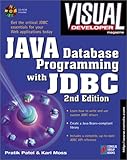
 Price: $39.99
-
Java Database Programming with JDBC by Pratik Patel and Karl Moss is an updated edition of the authors' guide to the Java Database Connectivity (JDBC) standard for database programming under Java. While the original edition was perhaps geared more to those developers who needed to write their own JDBC database drivers, a fairly arduous task, this new edition provides more background information on database connectivity issues in Java and so will be even more useful to the casual or intermediate programmer. After a general introduction to JDBC and Structured Query Language (SQL), useful even to beginning programmers, the authors start by building a simple database-aware applet. New chapters on "servlets," Java components that run on the server-side and manage database operations, as well as a general discussion of middleware technologies are particularly good. Database access for JavaBean components (from Sun Microsystems JDK 1.1) is also discussed, including working code for two database-aware beans. This book also includes a quick introduction to the Java language (which will only be helpful if you already know C/C++), a detailed reference for the JDBC API, and a working example of a text-based JDBC driver. Though this book is still oriented toward the JDBC driver developer, the authors now provide enough general discussion of JDBC architectural issues to make it worthwhile to any programmer who needs to ramp up on what JDBC is and what capabilities it offers.
- Java Database Programming with JDBC by Pratik Patel and Karl Moss is an updated edition of the authors' guide to the Java Database Connectivity (JDBC) standard for database programming under Java. While the original edition was perhaps geared more to those developers who needed to write their own JDBC database drivers, a fairly arduous task, this new edition provides more background information on database connectivity issues in Java and so will be even more useful to the casual or intermediate programmer. After a general introduction to JDBC and Structured Query Language (SQL), useful even to beginning programmers, the authors start by building a simple database-aware applet. New chapters on "servlets," Java components that run on the server-side and manage database operations, as well as a general discussion of middleware technologies are particularly good. Database access for JavaBean components (from Sun Microsystems JDK 1.1) is also discussed, including working code for two database-aware beans. This book also includes a quick introduction to the Java language (which will only be helpful if you already know C/C++), a detailed reference for the JDBC API, and a working example of a text-based JDBC driver. Though this book is still oriented toward the JDBC driver developer, the authors now provide enough general discussion of JDBC architectural issues to make it worthwhile to any programmer who needs to ramp up on what JDBC is and what capabilities it offers.
by Pratik Patel and Karl Moss
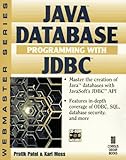 Price: $39.99
-
Java Database Programming with JDBC by Pratik Patel and Karl Moss is an updated edition of the authors' guide to the Java Database Connectivity (JDBC) standard for database programming under Java. While the original edition was perhaps geared more to those developers who needed to write their own JDBC database drivers, a fairly arduous task, this new edition provides more background information on database connectivity issues in Java and so will be even more useful to the casual or intermediate programmer. After a general introduction to JDBC and Structured Query Language (SQL), useful even to beginning programmers, the authors start by building a simple database-aware applet. New chapters on "servlets," Java components that run on the server-side and manage database operations, as well as a general discussion of middleware technologies are particularly good. Database access for JavaBean components (from Sun Microsystems JDK 1.1) is also discussed, including working code for two database-aware beans. This book also includes a quick introduction to the Java language (which will only be helpful if you already know C/C++), a detailed reference for the JDBC API, and a working example of a text-based JDBC driver. Though this book is still oriented toward the JDBC driver developer, the authors now provide enough general discussion of JDBC architectural issues to make it worthwhile to any programmer who needs to ramp up on what JDBC is and what capabilities it offers.
- Java Database Programming with JDBC by Pratik Patel and Karl Moss is an updated edition of the authors' guide to the Java Database Connectivity (JDBC) standard for database programming under Java. While the original edition was perhaps geared more to those developers who needed to write their own JDBC database drivers, a fairly arduous task, this new edition provides more background information on database connectivity issues in Java and so will be even more useful to the casual or intermediate programmer. After a general introduction to JDBC and Structured Query Language (SQL), useful even to beginning programmers, the authors start by building a simple database-aware applet. New chapters on "servlets," Java components that run on the server-side and manage database operations, as well as a general discussion of middleware technologies are particularly good. Database access for JavaBean components (from Sun Microsystems JDK 1.1) is also discussed, including working code for two database-aware beans. This book also includes a quick introduction to the Java language (which will only be helpful if you already know C/C++), a detailed reference for the JDBC API, and a working example of a text-based JDBC driver. Though this book is still oriented toward the JDBC driver developer, the authors now provide enough general discussion of JDBC architectural issues to make it worthwhile to any programmer who needs to ramp up on what JDBC is and what capabilities it offers.
by Pratik R. Patel, Alan D. Hudson, and Donald A. Ball
 Price: $49.95
-
Enables readers to master the Java programming language for internet applications while expanding the scope of online development, and the accompanying CD contains powerful sample applets and a copy of Netscape Navigator. Original. (Intermediate).
- Enables readers to master the Java programming language for internet applications while expanding the scope of online development, and the accompanying CD contains powerful sample applets and a copy of Netscape Navigator. Original. (Intermediate).
- NFJS SITES:
- No Fluff Just Stuff
- Uber Conf
- NFJS One
- SpringOne 2GX
- Rich Web Experience
- Continuous Delivery Experience
- SPRINGSOURCE SITES:
- Springsource.com
- Springsource.org