SpringOne 2GX 2011
Chicago, October 25-28, 2011


 Magnificent Mile Marriott
Downtown Chicago
540 North Michigan Ave.
Chicago, Illinois 60611
1 (800) 228-9290
[ Map it ]
Tim Berglund
Developer, Consultant, Author


Tim is a full-stack generalist and passionate teacher who loves coding, presenting, and working with people. He believes the best developer is one who is well-informed of specifics and can also make deep connections between software development and the broader world. He has recently been exploring non-relational data stores, continuous deployment, and how software architecture should resemble an ant colony.
His firm, the August Technology Group, helps clients with product development, technology consulting, and technology upgrade projects atop the JVM. The August Group's technology preferences reflect the generalist sensibilities of its founder, and its development practices are always lightweight, self-improving, and humanizing by design.
Tim is a speaker internationally and on the No Fluff Just Stuff tour in the United States, and is co-president of the Denver Open Source User Group in the Denver area, co-author of the DZone Clojure RefCard, co-presenter of the best-selling O'Reilly Git Master Class, co-author of Building and Testing with Gradle, and a member of the O'Reilly Expert Network.
He lives in Littleton, CO with the wife of his youth and their three children.
His firm, the August Technology Group, helps clients with product development, technology consulting, and technology upgrade projects atop the JVM. The August Group's technology preferences reflect the generalist sensibilities of its founder, and its development practices are always lightweight, self-improving, and humanizing by design.
Tim is a speaker internationally and on the No Fluff Just Stuff tour in the United States, and is co-president of the Denver Open Source User Group in the Denver area, co-author of the DZone Clojure RefCard, co-presenter of the best-selling O'Reilly Git Master Class, co-author of Building and Testing with Gradle, and a member of the O'Reilly Expert Network.
He lives in Littleton, CO with the wife of his youth and their three children.
Presentations
Seven Steps to Learning Grails
Grails is emerging as a standard JVM web framework in environments ranging from startups to the enterprise. It's a full-stack solution build on rock-solid components, fully relying on convention over configuration, and using the best application language the JVM has yet seen: Groovy. This is the place to be for web apps on the JVM.
In this introductory talk, we'll get a whirlwind introduction to Grails, visiting seven things you need to know about the framework to get started.
- Creating an app
- Development using the Tomcat server
- Interacting with the database
- Building your UI
- Processing web requests
- Tapping the huge plugin community
- Deploying to production
Grails Without SQL
Out of the box, Grails famously relies on Hibernate for database persistence through the agency of GORM, the Grails Object-Relational Mapping API. But are Grails apps permanently beholden to relational datastores, even when the relational model is not an appropriate solution for the problem at hand? No!
Grails provides popular plugins for such NoSQL contenders as MongoDB, Voldemort, Cassandra, and Redis. In this session, we'll take a quick look at each of those four NoSQL database technologies, how the products function on their own, and how their Grails plugins work. We'll also take a long step back and develop an understanding of why NoSQL products exist and how they differentiate themselves as containers for our data.
Books
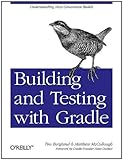
by Tim Berglund and Matthew McCullough
 Price: $24.99
-
Build and test software written in Java and many other languages with Gradle, the open source project automation tool that’s getting a lot of attention. This concise introduction provides numerous code examples to help you explore Gradle, both as a build tool and as a complete solution for automating the compilation, test, and release process of simple and enterprise-level applications.
Discover how Gradle improves on the best ideas of Ant, Maven, and other build tools, with standards for developers who want them and lots of flexibility for those who prefer less structure.
- Use Gradle with Groovy, Clojure, Scala, and languages beyond the JVM, such as Flex and C
- Get started building a simple Java program using Gradle's command line tooling and a small build script
- Learn how to configure and construct tasks, Gradle's fundamental unit of build activity
- Take advantage of Gradle's integration with Ant
- Use Gradle to integrate with or transition from Maven, and to build software more cleanly
- Perform application unit and integration tests using JUnit, TestNG, Spock, and Geb
Price: $24.99
-
Build and test software written in Java and many other languages with Gradle, the open source project automation tool that’s getting a lot of attention. This concise introduction provides numerous code examples to help you explore Gradle, both as a build tool and as a complete solution for automating the compilation, test, and release process of simple and enterprise-level applications.
Discover how Gradle improves on the best ideas of Ant, Maven, and other build tools, with standards for developers who want them and lots of flexibility for those who prefer less structure.
- Use Gradle with Groovy, Clojure, Scala, and languages beyond the JVM, such as Flex and C
- Get started building a simple Java program using Gradle's command line tooling and a small build script
- Learn how to configure and construct tasks, Gradle's fundamental unit of build activity
- Take advantage of Gradle's integration with Ant
- Use Gradle to integrate with or transition from Maven, and to build software more cleanly
- Perform application unit and integration tests using JUnit, TestNG, Spock, and Geb
- NFJS SITES:
- No Fluff Just Stuff
- Uber Conf
- NFJS One
- SpringOne 2GX
- Rich Web Experience
- Project Automation Experience
- SPRINGSOURCE SITES:
- Springsource.com
- Springsource.org
© 2011 No Fluff, Just Stuff TM and SpringSource, a division of VMware. All rights reserved. Java is a registered trademark of Oracle.