



SPRINGONE 2GX 2012: THE SPRING, GROOVY, GRAILS, & CLOUD EVENT OF THE YEAR!
Jeff Brown
Core Member of the Grails Development Team


Presentations
GORM Inside And Out
GORM is a super powerful ORM tool that makes ORM simple by leveraging the flexibility and expressiveness of a dynamic language like Groovy. With GORM developers get access to all of the power and flexibility of an ORM tool like Hibernate without any of the complexity.
This session will cover a lot of the GORM API from the developer's perspective as well as diving into some of the implementation details. Knowing how some of this works under the covers will give developers an opportunity to not only improve their productivity with GORM but also open up possibilities of using dynamic metaprogramming in other aspects of their application development efforts.
Extending Grails - The Plugin System
Grails is a super powerful framework for building applications for the Java platform. Grails addresses the pain points that the other web applications frameworks leave you with. This session covers the details you need to further extend Grails to help Grails help you in your environment.
Since 2006 Grails has had a really powerful and flexible plugin system. Much of the functionality in Grails itself is implemented as plugins. Grails makes it easy for you to further extend the framework to address needs in your environment. This session will detail how some of the core plugins work. The session will also cover all of the information needed to customize existing behavior or introduce whole new capabilities to the framework through the plugin system and other techniques.
Compile Time and Runtime Metaprogramming With Groovy
The dynamic nature of Groovy makes it a fantastic language for building dynamic applications for the Java Platform. The metaprogramming capabilities offered by the language provide everything that an application development team needs to build systems that are far more capable than their all Java counterparts. Taking advantage of Groovy's metaprogramming capabilities brings great new possibilities that would be very difficult or just plain impossible to write with Java alone. Building Domain Specific Languages in Groovy is easy to do once a team has a good understanding of the Metaobject-Protocol (MOP) and the method dispatch mechanisms used by the Groovy runtime environment.
This session will cover in detail a number of advanced metaprogramming concepts in Groovy. The discussion will cover using dynamic method interception, meta-class manipulation, AST transformations and Groovy's Metaobject-Protocol (MP) to build flexible applications in Groovy including implementing a Domain Specific Language (DSL).
Polyglot Web Programming With Grails
Grails is one of the most flexible and most powerful frameworks on The Java Platform. Grails leverages the flexibility offered by the platform in a way that other web frameworks do not. Grails is a fantastic platform for polglot web programming.
Part of what makes Grails so compelling is its really powerful plugin system. The Grails plugin system allows capabilities to be bolted on to applications, including adding support for a variety of programming languages. All of the major programming languages available on the JVM are supported by The Grails Framework. These include Java, Groovy, Scala, Clojure and others. This session will dive in to that aspect of the framework with a focus on Scala and Clojure and will demonstrate what is involved in adding support for new languages.
Books
by Graeme Rocher and Jeff Brown
 List Price:
 $46.99
Price: $31.01
You Save: $15.98 (34%)
-
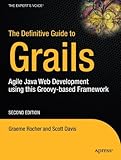
Java professionals long the productivity gains a framework like Ruby on Rails provides, without having to leave the Java Platform. Grails provides this missing link by bringing the best aspects from Grails while embracing the Java platform and language itself. Grails is an open source Java/Groovy-based Rails-like framework that gives dynamic Java a boost; so, Java developers now have a viable Java-based solution instead of considering the non-Java-based Ruby on Rails, which can create more problems than it solves. Grails, sometimes called Groovy on Rails, is an emerging area of much interest with already anticipated available support from such key Java projects as Spring, Oracle, and more.
The Definitive Guide to Grails, Second Edition, will be the first and definitive book on Grails written by the founder and leads of Grails.
Price: $31.01
You Save: $15.98 (34%)
-
Java professionals long the productivity gains a framework like Ruby on Rails provides, without having to leave the Java Platform. Grails provides this missing link by bringing the best aspects from Grails while embracing the Java platform and language itself. Grails is an open source Java/Groovy-based Rails-like framework that gives dynamic Java a boost; so, Java developers now have a viable Java-based solution instead of considering the non-Java-based Ruby on Rails, which can create more problems than it solves. Grails, sometimes called Groovy on Rails, is an emerging area of much interest with already anticipated available support from such key Java projects as Spring, Oracle, and more.
The Definitive Guide to Grails, Second Edition, will be the first and definitive book on Grails written by the founder and leads of Grails.
- NFJS SITES:
- No Fluff Just Stuff
- Uber Conf
- NFJS One
- SpringOne 2GX
- Rich Web Experience
- Project Automation Experience
- SPRINGSOURCE SITES:
- Springsource.com
- Springsource.org