



SPRINGONE 2GX 2012: THE SPRING, GROOVY, GRAILS, & CLOUD EVENT OF THE YEAR!
Guillaume LaForge
Head of Groovy Development for SpringSource


Presentations
Gaelyk, a lightweight Groovy toolkit for Google App Engine
Guillaume will present Gaelyk, a lightweight Groovy toolkit for easily developing Groovy applications to be deployed on Google App Engine Java. We'll learn more about what the toolkit provides, how to leverage it for your own needs through some demos. more »Groovy update: to infinity and beyond!
In "Groovy update, to infinity and beyond!", Guillaume Laforge will come back on Groovy's past, present and future. First, we'll do a quick review of Groovy 1.more »Gaelyk, a lightweight Groovy toolkit for Google App Engine

 By Guillaume LaForge
Guillaume will present Gaelyk, a lightweight Groovy toolkit for easily developing Groovy applications to be deployed on Google App Engine Java. We'll learn more about what the toolkit provides, how to leverage it for your own needs through some demos.
We'll see how to setup a Gaelyk application thanks to a template project, how to develop groovlets controllers and view templates, how to define routes for the URL routing system. We'll also describe all the syntax sugar and the shortcuts provided by Gaelyk on top of the Google App Engine SDK, and we'll eventually discuss briefly the simple plugin system that comes built-in.

Groovy update: to infinity and beyond!
By Guillaume LaForge
In "Groovy update, to infinity and beyond!", Guillaume Laforge will come back on Groovy's past, present and future. First, we'll do a quick review of Groovy 1.6 features: multiple assignment and option return in if/else and try/catch blocks, AST transformations with @Delegate, @Lazy, @Immutable, @Mixin and friends, the Grape dependency module, metaprogramming enhancements, JSR-223, JMX and OSGi support built-in. Then we'll dive into Groovy 1.7, especially how to simplify the creation of AST transformations, the small incremental improvements to the Groovy GDK, how to "customize the truth", power asserts, and more.
Eventually we'll discover the upcoming features in Groovy 1.8, for instance how to extend annotations beyond Java 5, potential new features such as structural pattern matching, parser combinators, actors, AST templates, and more.
Books
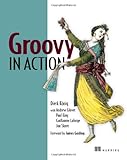
by Dierk Koenig, Andrew Glover, Paul King, Guillaume Laforge, and Jon Skeet
 List Price:
 $49.99
Price: $31.49
You Save: $18.50 (37%)
-
Groovy, the brand-new language for the Java platform, brings to Java many of the features that have made Ruby popular. Groovy in Action is a comprehensive guide to Groovy programming, introducing Java developers to the new dynamic features that Groovy provides. To bring you Groovy in Action, Manning again went to the source by working with a team of expert authors including both members and the Manager of the Groovy Project team. The result is the true definitive guide to the new Groovy language.
Groovy in Action introduces Groovy by example, presenting lots of reusable code while explaining the underlying concepts. Java developers new to Groovy find a smooth transition into the dynamic programming world. Groovy experts gain a solid reference that challenges them to explore Groovy deeply and creatively.
Because Groovy is so new, most readers will be learning it from scratch. Groovy in Action quickly moves through the Groovy basics, including:
Simple and collective Groovy data types Working with Closures and Groovy Control Structures Dynamic Object Orientation, Groovy style Readers are presented with rich and detailed examples illustrating Groovy's enhancements to Java, including
How to Work with Builders and the GDK Database programming with Groovy Groovy in Action then demonstrates how to Integrate Groovy with XML, and provides,
Tips and Tricks Unit Testing and Build Support Groovy on Windows An additional bonus is a chapter dedicated to Grails, the Groovy Web Application Framework.
Early PDF chapters of Groovy in Action are available from the Manning Early Access Program (MEAP) at http://www.manning.com/koenig. As part of this program, readers can also discuss the early manuscript with the author and help shape the manuscript as it's being developed by joining the Author Forum.
Price: $31.49
You Save: $18.50 (37%)
-
Groovy, the brand-new language for the Java platform, brings to Java many of the features that have made Ruby popular. Groovy in Action is a comprehensive guide to Groovy programming, introducing Java developers to the new dynamic features that Groovy provides. To bring you Groovy in Action, Manning again went to the source by working with a team of expert authors including both members and the Manager of the Groovy Project team. The result is the true definitive guide to the new Groovy language.
Groovy in Action introduces Groovy by example, presenting lots of reusable code while explaining the underlying concepts. Java developers new to Groovy find a smooth transition into the dynamic programming world. Groovy experts gain a solid reference that challenges them to explore Groovy deeply and creatively.
Because Groovy is so new, most readers will be learning it from scratch. Groovy in Action quickly moves through the Groovy basics, including:
Simple and collective Groovy data types Working with Closures and Groovy Control Structures Dynamic Object Orientation, Groovy styleReaders are presented with rich and detailed examples illustrating Groovy's enhancements to Java, including
How to Work with Builders and the GDK Database programming with GroovyGroovy in Action then demonstrates how to Integrate Groovy with XML, and provides,
Tips and Tricks Unit Testing and Build Support Groovy on WindowsAn additional bonus is a chapter dedicated to Grails, the Groovy Web Application Framework.
Early PDF chapters of Groovy in Action are available from the Manning Early Access Program (MEAP) at http://www.manning.com/koenig. As part of this program, readers can also discuss the early manuscript with the author and help shape the manuscript as it's being developed by joining the Author Forum.
- NFJS SITES:
- No Fluff Just Stuff
- Uber Conf
- NFJS One
- SpringOne 2GX
- Rich Web Experience
- Project Automation Experience
- SPRINGSOURCE SITES:
- Springsource.com
- Springsource.org